
- “If every economic or social disruption is enough to trigger emergency eviction bans, then the constitutional protections for property owners are not just weakened — they are effectively optional.” – California Apartment Association
By Vanguard Staff
LOS ANGELES, CA — The California Apartment Association (CAA) says the Los Angeles County Board of Supervisors’ decision to declare a local state of emergency in response to federal immigration enforcement actions is proof of a growing and dangerous trend — the normalization of emergency powers as a political tool to suspend property rights.
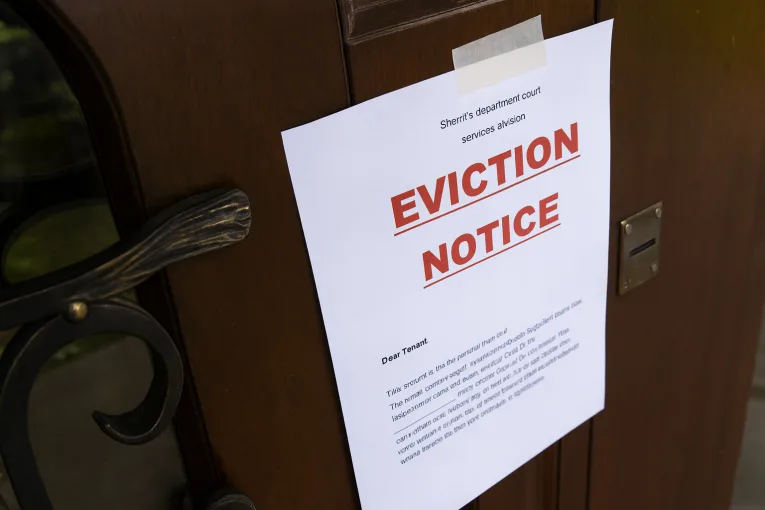
The association argues that the move, though not related to a natural disaster or public health emergency, is an early indication that Los Angeles County could use its new powers to impose another eviction moratorium. “County officials acknowledged that this declaration is the necessary first step toward imposing yet another eviction moratorium,” the CAA wrote in a statement published on its website this week.
For CAA, this development validates the central premise of its ongoing federal lawsuit against Alameda County over its COVID-era eviction moratorium — that unchecked emergency powers pose a long-term threat to constitutional protections for property owners.
“The case was not simply about one pandemic policy — it was about setting a lasting constitutional boundary,” CAA said. The group maintains that its legal challenge was meant to ensure that temporary crises do not become permanent justifications for suspending private contracts and property rights.
CAA filed the lawsuit nearly four years ago, after Alameda County extended its eviction protections long after the height of the COVID-19 pandemic had passed. The association warned at the time that if governments were permitted to continue invoking emergency powers without meaningful judicial scrutiny, those powers could easily be repurposed to advance political or social agendas unrelated to any genuine emergency.
That warning, CAA says, is now coming to fruition. “This maneuver confirms precisely what CAA’s lawsuit seeks to prevent: the normalization of emergency powers as a political tool to suspend property rights whenever convenient,” the statement reads. “If every economic or social disruption is enough to trigger emergency eviction bans, then the constitutional protections for property owners are not just weakened — they are effectively optional.”
According to CAA, Los Angeles County’s emergency declaration is an example of what can happen when local governments face political pressure to intervene in housing policy but lack legislative authority to do so. By invoking emergency powers, CAA argues, counties can bypass ordinary policy processes, sidestep debate, and implement measures that have sweeping economic consequences.
CAA’s lawsuit against Alameda County seeks to establish what it calls a “constitutional precedent” to limit that kind of overreach. “The goal has always been to establish a constitutional precedent that emergency powers cannot be stretched indefinitely or repurposed to enact permanent housing policy by decree,” the association said. “Extraordinary powers were never meant to be a blank check to suspend private contracts, distort markets, or compel housing providers to shoulder social policy burdens without due process.”
In the association’s view, eviction moratoriums imposed under extended or unrelated emergency declarations undermine both the legal framework of property ownership and the broader functioning of the housing market. CAA contends that repeated reliance on emergency powers discourages investment in rental housing, worsens the housing shortage, and shifts financial burdens onto small landlords who may not have the resources to absorb months of unpaid rent.
“Los Angeles County’s latest action underscores why this legal fight is essential — not just for one jurisdiction but for every rental housing provider in California,” the organization wrote. “If every societal challenge can be declared an emergency, then every emergency can become an excuse for another eviction ban.”
The association’s Legal Fund, which supports litigation efforts like the Alameda County lawsuit, is central to its broader strategy of defending landlords’ rights through the courts. “CAA’s Legal Fund exists for this reason,” the statement continued. “It ensures that when government oversteps, our industry is not powerless — we are prepared.”
The CAA concluded that judicial intervention is necessary to prevent emergency powers from becoming a default mechanism for policymaking. “The courts must draw a constitutional boundary, and that boundary must be drawn now before emergency powers become the default mechanism for housing policy,” the association said. “CAA will continue to fight — because the future of property rights in California depends on it.”
The organization has positioned its lawsuit as a pivotal test case not just for landlords in Alameda County but for property owners statewide. It argues that the courts must define where legitimate emergency responses end and unconstitutional overreach begins.
For CAA and its members, Los Angeles County’s declaration is more than a symbolic gesture — it is a warning. The association’s leadership says that unless limits are imposed, emergency powers could become a routine tool for local governments to achieve policy objectives that would otherwise face legislative or judicial resistance.
CAA maintains that the stakes extend far beyond the housing sector. The group’s statement frames the issue as one of constitutional principle and democratic accountability. If emergency powers can be invoked for political convenience, CAA argues, they risk eroding both property rights and the rule of law itself.
Follow the Vanguard on Social Media – X, Instagram and Facebook. Subscribe the Vanguard News letters. To make a tax-deductible donation, please visit davisvanguard.org/donate or give directly through ActBlue. Your support will ensure that the vital work of the Vanguard continues.
