
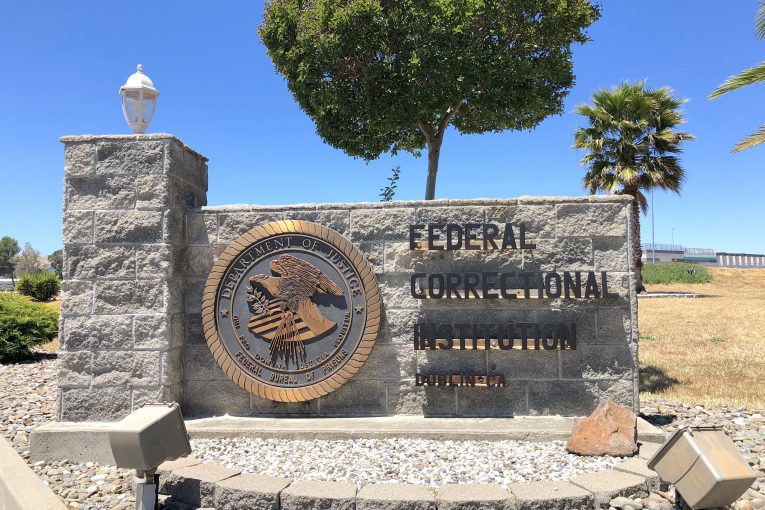
SAN FRANCISCO – Human rights activists are urging the federal government not to reopen Federal Correctional Institute (FCI) Dublin, California, as an ICE detention center, arguing the facility has a documented history of sexual violence and human rights violations, according to an ActionNow petition.
The Los Angeles Times reported that multiple officers, including former Warden Ray J. Garcia and prison chaplain Jesse Highhouse, were convicted of sexual abuse at the facility.
Now, the immigrant women who testified against them are being deported even though they qualify for U Visas, which provide a pathway to citizenship, according to KTVU. Human rights advocates worry that ICE will repeat the same abuses or retaliate against these immigrants with deportation, according to the ActionNow petition.
While no official announcements have been made, “BOP [Bureau of Prisons] Central Office staff, BOP Western Regional Staff and ICE representatives did a visual structural assessment on FCI Dublin,” American Federation of Government Employees Local 3584 President Edward Canales told KQED. “Basically, can the prison hold detainees as is, or [does it] need repairs.”
Not only have protests come from women who survived abuse at FCI Dublin, but Japanese Americans who lived through U.S. wartime incarceration have also joined in opposition, drawing parallels to xenophobic detention policies they vowed would “never happen again.” Research shows communities near ICE detention centers experience higher immigration arrest and deportation rates.
In addition, recidivism for staff-perpetrated prison sexual abuse is high. Susan Beaty of the California Collaborative for Immigrant Justice told Truthout that transferring incarcerated women to another facility after FCI Dublin shut down did not protect them. “Sexual abuse, medical neglect and retaliation exists across the system,” she said. “It doesn’t solve the problems to move people who have already been through so much to other places — farther away from their families and their attorneys — where they’re going to be subjected to very similar kinds of harm.”
Sexual abuse has been documented in U.S. correctional systems since the nation’s founding. Prisons are structured around control, and sexual abuse functions as a tool of domination with roots connected to colonial and chattel slavery power systems.
Sexual abuse can also be used to coerce incarcerated people into making a warden appear “productive” or “helpful” to external stakeholders. When wardens are labeled “productive” without a formal rating system, they may receive financial bonuses.
On its website, the Federal Bureau of Prisons announced that former FCI Dublin Warden Wiley Z. Jenkins received the Army Community Partnership Award. FCI Dublin sits adjacent to the Parks Reserve Forces Training Area on a former air base and uses incarcerated workers to provide labor below minimum wage in exchange for job training. The maximum a federal prisoner can earn is $2 per hour.
Despite accessing what amounts to nearly free labor while the government spends approximately $80 billion annually on corrections and $1.2 trillion to operate government-run facilities, historian Alexander Lichtenstein and Michael Kroll wrote in a project of the American Friends Service Committee, “Prisons, filled with unemployed people of color from the inner cities, are being sold to economically depressed rural communities as a source of jobs for their growing numbers of unemployed — who are usually whites.”
Women are disproportionately targeted by economic conditions that lead to incarceration. The Prison Policy Initiative reported that “35% of women experienced homelessness, eviction, or struggled to make rent or mortgage payments as a result of bail, court fees and lost economic opportunities. Incarceration cost one-third of women their household’s primary source of income, and 43% were forced to work more hours, get a different job, or turn down an educational opportunity as a result.”
In The New Yorker, reporter Eric Markowitz explained that “the country’s historic incarceration boom has given rise to companies that provide services and products to government prisons. Many of these provide necessary equipment and services, of course, but some do so in rather unsavory ways.”
Markowitz pointed to the prison phone industry, which is dominated by a small number of private companies that make an estimated $1.2 billion annually from phone and video call fees. These calls can cost up to $30 for 40 minutes.
The prison health care provider Corizon Health earns $1.4 billion per year and has faced allegations including failing to hire registered nurses for intake evaluations and leaving terminally ill patients in soiled beds without food or water.
Commissary prices inside prisons can be five times higher than retail stores, resulting in approximately $1.6 billion in annual profit for the commissary industry.
Markowitz wrote that Peter Wagner, executive director of the Prison Policy Initiative, told him, “I expect the government to waste money. But it’s totally different for the government to collude with a private company to make poor people lose money.”
With the U.S. economy benefiting from the detention system and wardens allegedly using sexual abuse to maintain obedience, advocates argue that the location of future ICE facilities is not the issue. They say the problem is the carceral structure itself.
Advocates warn systemic profit incentives, retaliation against survivors and staff transfers normalize abuse and create a culture of impunity. They argue reopening FCI Dublin under ICE would not prevent future harm — it would replicate it.
Follow the Vanguard on Social Media – X, Instagram and Facebook. Subscribe the Vanguard News letters. To make a tax-deductible donation, please visit davisvanguard.org/donate or give directly through ActBlue. Your support will ensure that the vital work of the Vanguard continues.
