
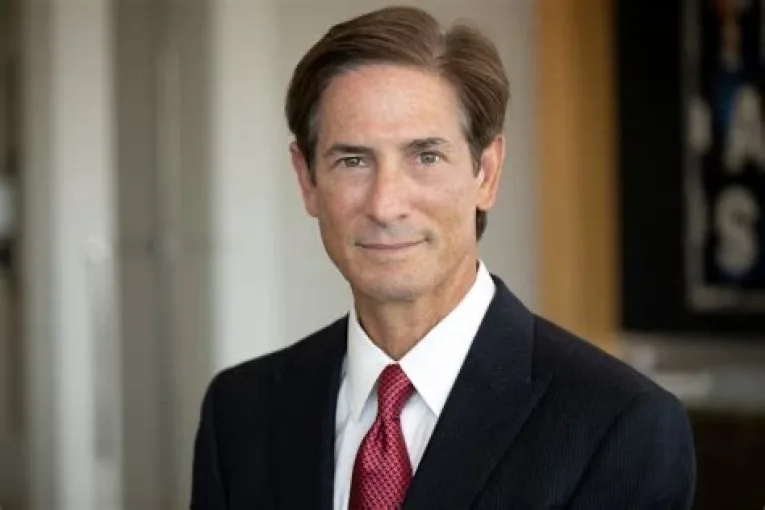
When Nathan Hochman ran for Los Angeles County district attorney in 2024, he promised a return to “balance.” He criticized his predecessor, George Gascón, for filing cases against law enforcement that he argued would not hold up before a jury, while pledging he would still prosecute officers “when warranted.”
One year into his tenure, the record raises serious questions about what that promise means in practice.
A recent Los Angeles Times analysis details a pattern: high-profile police misconduct cases filed under Gascón have been downgraded, dismissed or resolved with no incarceration under Hochman’s leadership. In the few police misconduct cases his office has taken to trial, the office has not secured a conviction.
That alone would not necessarily prove bad faith. Police prosecutions are notoriously difficult to win. But the trend, combined with personnel shifts, charging decisions and the political context of Hochman’s campaign, suggests more than just a neutral reassessment of evidence. It suggests a recalibration — and perhaps a retreat.
It is undeniably difficult to convict an on-duty officer in a shooting. Los Angeles County has not seen a guilty verdict in such a case since 2000. Use-of-force jurisprudence gives officers broad latitude. Prosecutors must often prove beyond a reasonable doubt that a specific officer’s conduct caused death and was criminal, not merely negligent or reckless within the bounds of training.
Hochman leans heavily on that reality.
“I’m going to look at the facts and the law of any case. I don’t believe in the spaghetti against the wall approach where you throw the spaghetti against the wall, and see if anything sticks, and let the jury figure it out,” Hochman said. “That would be me abdicating my responsibility.”
That sounds good in theory, as prosecutors should not file weak cases merely to appease public anger.
In cases involving police officers, the district attorney’s duty is not simply to secure easy convictions but to push the boundaries of accountability in systems that have historically failed to deliver it.
Moreover, when the baseline is zero convictions in 25 years, “prudence” can quickly become a justification for paralysis.
Nowhere is this tension clearer than in the death of Edward Bronstein.
In 2023, Gascón’s office charged seven California Highway Patrol officers and a nurse with involuntary manslaughter in connection with Bronstein’s 2020 death during a court-ordered blood draw. Video shows officers piling on Bronstein while he screamed and struggled. Within minutes, his body went limp.
Under Hochman, charges against all but one officer were dismissed.
The remaining defendant, Sgt. Michael Little, saw his case reduced to a misdemeanor and received 12 months of probation. The nurse, Arbi Baghalian, still faces prosecution.
Hochman said his office reviewed civil depositions and concluded it would be “impossible to say any officer specifically caused Bronstein’s death.”
He emphasized the lack of intent and the role of a supervising sergeant and medical personnel in the chain of command.
Bronstein’s daughter, Brianna Ortega, expressed a far different view.
“It just seems like because they’re cops … they must get away with it,” Ortega said. “How are you going to put the blame on one person when all of you are grown men who know better? You have common sense. You have human decency. He is literally telling you he can’t breathe.”
The coroner attributed Bronstein’s death to “acute methamphetamine intoxication during restraint by law enforcement.” His family later received a $24-million civil settlement.
Civil cases carry a lower burden of proof, but when a multimillion-dollar settlement is followed by dismissed criminal charges, the public takeaway is that taxpayers pay, officers do not.
Hochman’s handling of staff assignments has deepened distrust among critics.
Three prosecutors associated with the police misconduct unit — all with ties to Gascón — were removed from cases shortly before trials or plea negotiations. According to former prosecutor Greg Apt, “When somebody’s lived that case for years, and then you take them off, it suggests that you’re less than serious about winning that case.”
Hochman insists the transfers were based on trial experience, not politics.
But there is plenty of room for skepticism there.
When the very attorneys who developed complex police cases are sidelined, and the resulting trials end in acquittals or hung juries, skepticism only grows louder.
In one case involving alleged perjury by sheriff’s deputies, jurors deliberated less than an hour before acquitting. In another, former Whittier Detective Salvador Murillo’s trial ended in a deadlocked jury, though a majority reportedly leaned toward conviction.
Hochman has indicated he may retry Murillo.
If he does, it will be a crucial test of whether his office is truly willing to invest resources in difficult accountability cases — or whether such prosecutions will be rare exceptions.
The Los Angeles Times reports that Hochman filed 15 cases against officers in 2025, compared with 17 filed by Gascón in his final year. On paper, that gap is small.
But substance matters more than quantity.
Gascón emphasized excessive-force cases that had ignited public outrage during the post-2020 reckoning over police violence. Hochman has more frequently filed cases involving fraud or evidence tampering — important issues, but less politically explosive than officer-involved killings.
Critics also note that Hochman received millions in campaign contributions from police unions.
He has rejected any suggestion that those donations influence his decisions and pointed to bipartisan support for his campaign.
Influence doesn’t need to be spoken aloud—when a prosecutor rides into office with law enforcement behind them, the risk-taking fades and the will to pursue tough or controversial cases too often fades with it.
It would be one thing if he had a compelling case to rebut the narrative, but absent that, “balance” starts to look less like fairness and more like political cover.
As the Times analysis points out, Hochman still faces consequential decisions.
He must determine how to proceed in the case of Clifford Proctor, a former Los Angeles Police Department officer charged in a 2015 fatal shooting of an unarmed homeless man. He must decide whether and how to pursue the killing of Keith Porter Jr., shot by an off-duty U.S. Immigration and Customs Enforcement agent on New Year’s Eve.
These cases will define his tenure far more than speeches about “facts and the law.”
Hochman is correct that prosecutors cannot bring cases simply because people are upset.
As he put it regarding community activists who met with him, “They couldn’t point out anything in that analysis that they disagreed with. Other than the result.”
Outcomes are not incidental in justice work—they are how communities measure accountability, and when results continually fall short, explanations begin to sound less like context and more like cover for business as usual.
Los Angeles has not convicted an on-duty officer in a shooting in a quarter-century, and in a city shaped by the Watts uprising, the Rodney King beating, and the Rampart scandal, it has not earned the benefit of the doubt—if anything, it has earned the opposite.
Against that history, a district attorney who downgrades charges in high-profile cases, sidelines experienced prosecutors, and secures no convictions cannot be judged in a vacuum, but in the long shadow of a system that has repeatedly failed.
The public is not asking for reckless prosecutions; it is demanding that the legal wall that has long shielded police conduct be forcefully and meaningfully tested.
Whether Nathan Hochman intends to do that remains an open question. For now, the pattern remains retreat rather than reform.
Follow the Vanguard on Social Media – X, Instagram and Facebook. Subscribe the Vanguard News letters. To make a tax-deductible donation, please visit davisvanguard.org/donate or give directly through ActBlue. Your support will ensure that the vital work of the Vanguard continues.
