
Part II of The Price of Being Poor Investigation
By Journalist Malik Washington | Destination Freedom Media Group & The Davis Vanguard
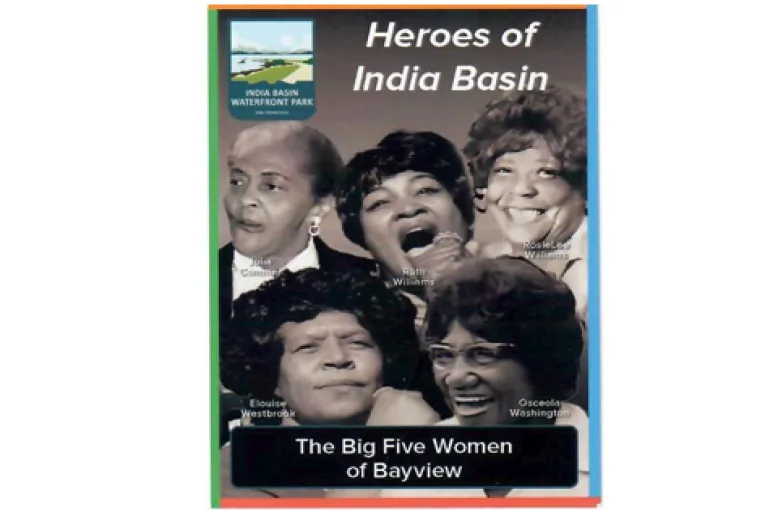
“These women brought back 40 million dollars from Washington DC. It is incorrectly reported as $35 million. In any event, that is an incredible amount of money for the early 1970’s on economies of scale. The Big Five did what the politicians failed to do for the people of Bayview Hunters Point. My mother, Ruth, is credited with giving the area once called Butchertown a new name, called today, “India Basin.”
~Elder Kevin Williams, son of Ruth Williams
SAN FRANCISCO — Virginia Jones walked into that courtroom believing someone had her back.
She is a senior citizen, a longtime resident of Bayview-Hunters Point, a woman who has lived through decades of broken promises to Black San Franciscans. And when a contractor sought payment for flooring work she says was faulty and improperly performed, she turned to Open Door Legal—the nonprofit that promised access to justice for people with nowhere else to turn.
They accepted her case. For a moment, it appeared that someone was finally listening. Then came the day of trial.
The experienced lawyer assigned to her case did not appear. Instead, according to information provided by Elder Kevin Williams, Open Door Legal sent interns Ms. Jones had never met and had not spoken with beforehand. During the proceeding, one of them reportedly told the judge that the amount at issue was “nothing” for Ms. Jones to pay because she donates that much to her church. Open Door Legal, according to Williams and the case narrative he provided, did not present what he describes as the most important defense available: that the contractor was working under an insurance arrangement containing a hold-harmless provision that would have protected Ms. Jones from liability.
She lost.
A mechanic’s lien was placed on her house. According to the information provided for this investigation, that lien has remained an ongoing burden since 2018, forcing Ms. Jones to spend her own money on additional counsel to undo damage she believes Open Door Legal helped create.
This is not simply a story about one courtroom disaster.
This is a story about a nonprofit that built public credibility in Bayview-Hunters Point, secured public money while promising legal access for vulnerable residents, and then—according to community testimony, grant documents, and multiple case accounts—closed its doors when Black seniors and disabled residents asked it to do the work it was funded to perform.
This investigation asks a direct question:
How does an organization receive public money to serve poor, elderly and disabled residents while community leaders in Bayview-Hunters Point say it routinely tells those same residents: You do not have a case?
The Promise: “Universal Access to Justice”
Open Door Legal presents itself as a civil legal aid innovator. Its public-facing message is expansive. It speaks in the language of access, dignity, equity and universal legal care. It says it is pioneering a model of civil legal services for low-income San Franciscans. It says it is committed to helping people facing landlord abuse, housing instability, debt, benefits problems and other civil legal crises.
Its roots in Bayview-Hunters Point mattered.
That matters because Bayview-Hunters Point is not a decorative backdrop. It is a Black community with a long memory. It is a neighborhood shaped by displacement, environmental racism, neglect, redevelopment schemes and predatory systems that show up with promises and leave with contracts.
According to the material reviewed for this investigation, Open Door Legal’s Bayview presence helped establish its legitimacy in one of San Francisco’s most impacted neighborhoods. But as the organization grew, so did concern from local advocates who say the people of Bayview helped build the brand, only to be denied meaningful representation once the money started coming in.
The money is substantial.
Based on the figures provided in the materials assembled for this article, Open Door Legal reported approximately $6.87 million in 2024 revenue. The same materials reflect millions in city grants, including a reported $3.5 million in city grant support in 2024 and a later announced $4.7 million grant from the San Francisco Department of Homelessness in March 2026. Additional grant documents supplied for review include a separate public funding stream for disability-related legal services and a major westside expansion grant.
One grant agreement is particularly important.
Grant Agreement #1000020362, executed between the City and County of San Francisco Human Services Agency and Open Door Legal, states that the purpose was “to provide legal services to adults with disabilities.” The contract total was identified in the provided material as $154,000 over a term spanning January 2021 through June 2024.
That language is not vague.
Not “community engagement.”
Not “outreach.”
Not “capacity-building.”
Legal services to adults with disabilities.
Then there is the westside expansion.
A separate memorandum provided for this investigation describes a Westside Legal Services grant totaling $1,622,552 for a term beginning Jan. 1, 2023, and ending June 30, 2026. That document reportedly identifies 1722 Irving St. in the Sunset District as the service location and references an $80,000 expense for renovation of the Sunset lease space. The memorandum also describes the service target area as residents in Districts 1, 4 and 7—areas including the Richmond, Sunset and Western Addition.
Not District 10. Not Bayview-Hunters Point.
So the question becomes unavoidable: If Bayview helped provide the moral and political foundation for Open Door Legal’s public image, why do the dollars appear to travel west while Bayview residents say the legal representation does not?
Elder Kevin Williams and the Community’s Charge
Kevin Williams is not describing this as a misunderstanding.
He is describing it as a pattern.
Williams, an elder and community advocate in Bayview-Hunters Point, says he once strongly supported Open Door Legal. He says respected Black leaders did too. He says he personally referred numerous people to the organization—seniors, disabled residents and Black tenants who needed legal help.
And then he says he started noticing something deeply disturbing.
In the materials provided for this investigation, Williams wrote:
“At every turn, a pervasive pattern began that reveals, after ODL obtained demographic data from the referral, every one of the residents were consistently told that they didn’t have a case. Thereafter, ODL summarily closed the cases.”
I did not simply interview Elder Kevin Williams for this article. I sat in community meetings with him.
I sat next to Elder Oscar James and Elder Carpenter and listened intently, taking notes as they shared their wisdom, knowledge and experience. They reminded me repeatedly that if you are going to speak for this community, it comes with responsibility and a mandate to serve the interests of the community first.
That responsibility is not symbolic. It is a duty.
And what those elders described was not confusion. It was a pattern of abandonment.
The community has given the organization a new name:
“Closed Door Legal.”
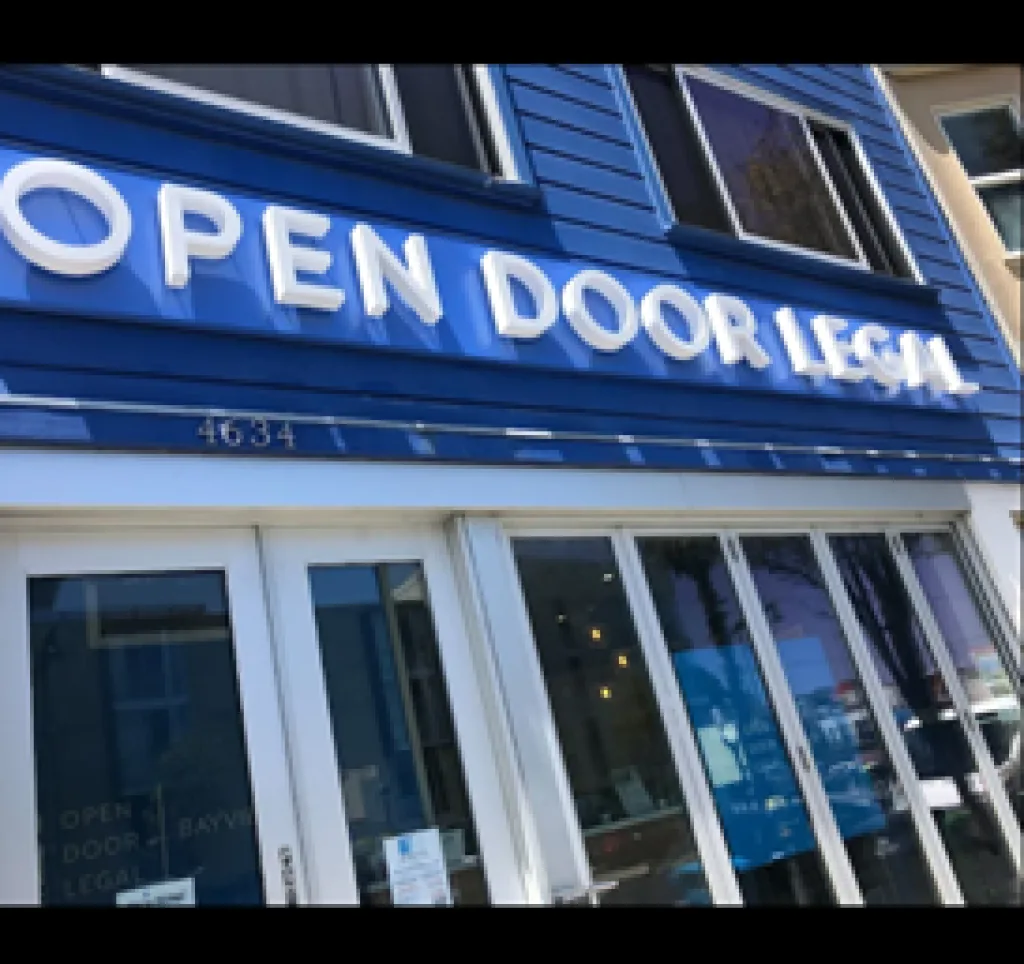
Open Door Legal—sometimes referred to by critics as “Closed Door Legal”—has multiple locations in San Francisco. The Bayview location is at 4634 Third Street, San Francisco, CA 94124.
THE CASES COMMUNITY ADVOCATES SAY WERE REFUSED
The power of this story lies not in abstractions but in names.
Kevin Gastinell
Kevin Gastinell, according to Kevin Williams, is a physically disabled and respected church deacon. Williams says Gastinell was banned from a Walgreens on John Daly Boulevard after offering a prayer for an employee during a period when anti-Asian hate crimes were dominating headlines.
Williams says detectives crossed jurisdiction lines and visited Gastinell at his home in Bayview, asking questions about mental health and medication. Williams characterizes the situation as involving potential civil rights and constitutional violations. Open Door Legal, he says, declined the case.
Larry Ware
Williams also identifies Larry Ware, a disabled senior who uses a wheelchair.
According to Williams, Ware was pushed down the stairs by his landlord at an apartment near Third and Jamestown. He says Ware suffered serious injuries and filed a police report. Williams says the evidence was presented to Open Door Legal.
He says the organization dropped the case.
Virginia Jones
Then there is Virginia Jones, whose case opens this article.
Williams says Open Door Legal accepted her case but failed to provide adequate representation at trial, sending interns unfamiliar with her case and failing to raise a key defense. The result, according to Williams, was a ruling against Ms. Jones and a mechanic’s lien placed on her home.
Gwendolyn-Fagan Jackson
Williams also cites Gwendolyn-Fagan Jackson, who sought help from Open Door Legal after the death of her mother, Dr. Espanola Jackson.
Dr. Jackson, Williams notes, served on the board of Bayview Hunters Point Community Legal during her lifetime. According to Williams, Open Door Legal declined to assist her daughter with a malpractice matter connected to Kaiser Permanente.
Kevin Williams Himself
Williams says the pattern eventually reached his own family.
After the 2019 death of his daughter, attorney Chaune Williams, he retained Open Door Legal to assist with closing her law practice and a separate matter involving his son.
But once he began pressing the organization to provide representation to Bayview residents he had referred, Williams says the organization withdrew.
The explanation, he says, was that he lived in the “wrong zip code.”
His response was blunt:
“So they went from discrimination by race to discrimination by zip code.”
Court Records Raise Additional Questions
Another issue raised in the materials provided for this investigation concerns litigation capacity.
Court docket pages reviewed as part of this investigation indicate that Open Door Legal has appeared in numerous matters in San Francisco Superior Court involving conservatorships, housing disputes and estate cases.
One listing reportedly includes:
The Estate of Chaune E. Williams, Esq.
If accurate, that listing confirms Williams’ statement that the organization at one point assisted in matters related to his daughter’s estate.
Another docket listing references:
Sosaia Havae vs. Open Door Legal Services
Without reviewing the underlying filings, the details of that case cannot be assessed here. But the existence of litigation against the organization raises additional questions about its relationship with clients.
The larger point is straightforward.
The docket record suggests Open Door Legal has litigation capacity.
Which raises a simple question:
If the organization had the capacity to litigate other cases, why do Bayview residents say they were consistently told they had none?
FOLLOWING THE MONEY
Financial records and summaries provided for review show a well-funded organization with a growing staff.
Compensation figures referenced in the materials include:
Adrian Tirtanadi, Executive Director — about $152,000
Nikki Love, Director of Legal Services — about $149,500
Victoria Harris, Director of Finance — about $147,500
Whitney Tu, Director of Talent & Culture — about $147,000
Charmaine Lacsina, Director of Innovation & Strategy — about $147,000
Laura Turner, Director of Development — about $121,500
Sierra Loya, Associate Director of Development — about $118,100
That totals more than $1 million in compensation for seven employees.
There is nothing inherently wrong with nonprofit staff being paid professional salaries.
But when millions of public dollars flow into an organization, communities have a right to ask what services are being delivered in return.
Especially when elders in the neighborhood that helped build the organization’s reputation say their residents were repeatedly turned away.
THE BAYVIEW DEMAND FOR ACCOUNTABILITY
According to the materials provided for this investigation, the Bayview Hunters Point Coordinating Council issued a demand letter to Open Door Legal on September 10, 2025, calling for accountability.
Kevin Williams says the organization never responded.
If that account is accurate, the organization had an opportunity to address community concerns directly.
And chose silence.
In a community that has spent decades fighting for environmental justice, housing justice and political recognition, silence from institutions that claim to represent the vulnerable is rarely interpreted as neutrality.
It is interpreted as disregard.
The Political Question for City Hall
The implications of this story extend beyond one nonprofit.
If Open Door Legal receives public funds and presents itself as a cornerstone of San Francisco’s access-to-justice infrastructure, then Mayor Daniel Lurie’s administration cannot treat concerns about service disparities as someone else’s problem.
Public funding creates public responsibility.
City leaders must ask whether taxpayer-funded legal services are reaching the communities those programs were designed to protect.
Because Bayview-Hunters Point residents say something very different is happening.
They say the doors are closed.
The Question That Remains
Open Door Legal says it believes in access to justice.
Then the community deserves access to accountability.
Transparency about who is served.
Transparency about who is turned away.
Transparency about where public money goes.
Bayview-Hunters Point residents are tired of slogans.
They want representation.
They want honesty.
They want institutions that do not build reputations in Black neighborhoods only to abandon them once the contracts are secured.
Virginia Jones deserved better.
Larry Ware deserved better.
Kevin Gastinell deserved better.
The family of Dr. Espanola Jackson deserved better.
Elder Kevin Williams deserved better.
Bayview-Hunters Point deserved better.
This investigation continues.
THE STRUGGLE CONTINUES. ✊🏿
Only the people who know the history of discrimination in Bayview-Hunters Point can understand how very serious this article really is.
Mr. Kevin Williams is the son of legendary activist Ruth Williams.
If the people in the City of San Francisco will not listen or respect his voice and the information that he has shared with me, I don’t know what more I can do to advocate and tell the facts and story that needs to be told.
Nevertheless, I will continue telling these stories.
Here’s our song/video for this article:
We Are One (Video) ● Maze Featuring Frankie Beverly
For many years and possibly even decades, politicians and corporate shysters have collaborated in order to divide black San Francisco. Now in 2026, there is a new cadre of men and women from the Fillmore and Bayview-Hunters Point who believe that “UNITY” is our most powerful weapon against those who seek to exploit and divide us. We stand on the shoulders of the Big 5 and many other legendary and iconic leaders from San Francisco who fought for equity and self-determination in the Black community.
ABOUT THE AUTHOR
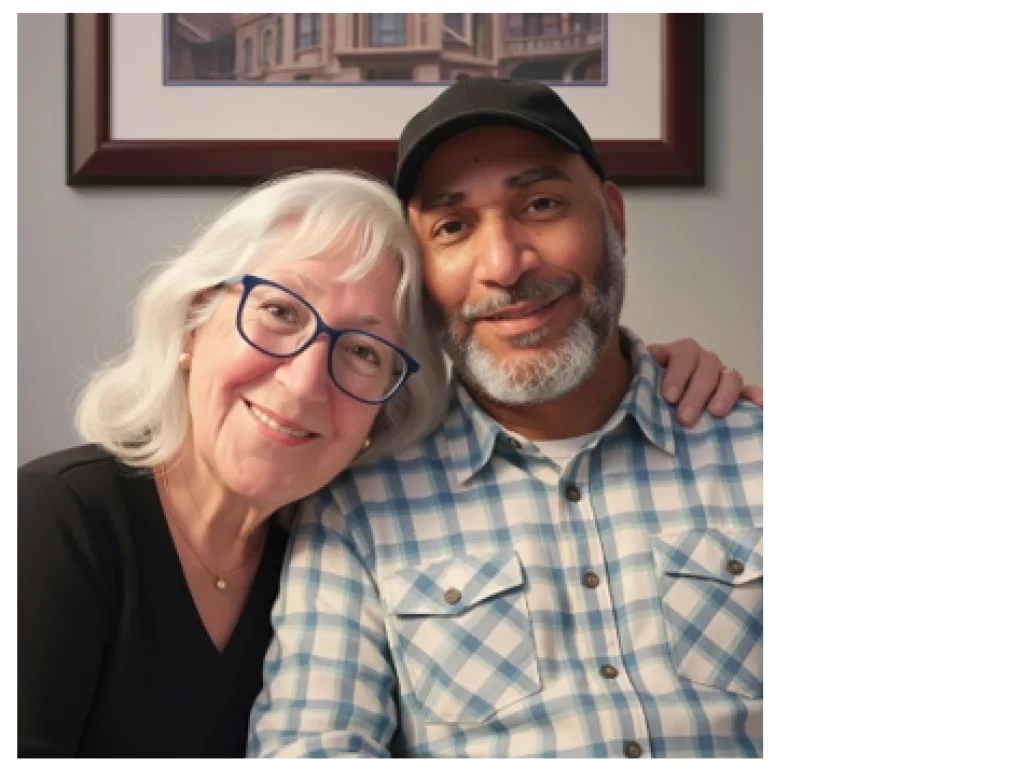
Malik Washington is an investigative journalist and co-founder of Destination Freedom Media Group, an independent nonprofit newsroom dedicated to accountability reporting at the intersection of civil rights, public integrity, disability justice, structural accountability within American institutions, and community survival. He has been a published journalist for over 14 years.
His work—published in partnership with the Davis Vanguard—focuses on government power, criminal justice, environmental justice, and the human consequences of policy decisions too often insulated from public scrutiny. Washington’s reporting amplifies the voices of impacted communities while insisting on documentary evidence, transparency, and the unvarnished truth—especially when institutions demand silence.
His work appears on platforms such as Muck Rack and Black Voice News, examining the intersection of justice, governance, and community.
You can reach him via email: mwashington2059@gmail.com or call him at (719) 715-9592.
Follow the Vanguard on Social Media – X, Instagram and Facebook. Subscribe the Vanguard News letters. To make a tax-deductible donation, please visit davisvanguard.org/donate or give directly through ActBlue. Your support will ensure that the vital work of the Vanguard continues.
