
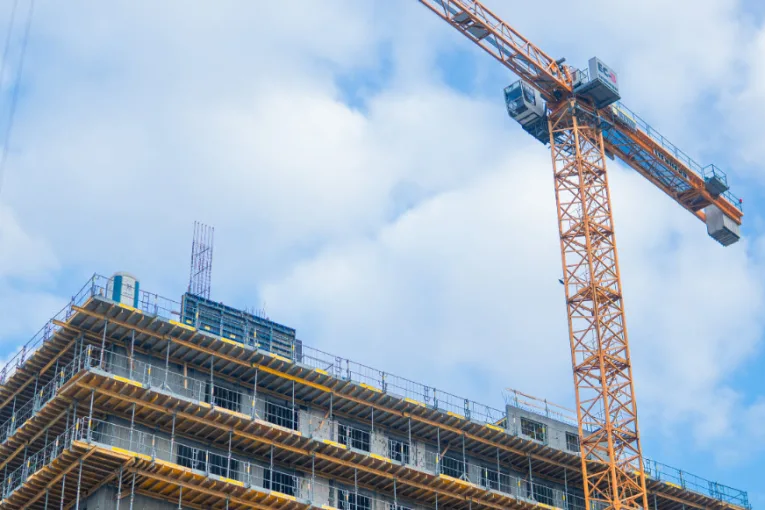
SACRAMENTO — California lawmakers are highlighting construction innovation as a potential pathway to address the state’s severe housing shortage following the release of a new report from UC Berkeley’s Terner Center for Housing Innovation examining how factory-based construction methods could help reduce costs and increase housing production.
The report, titled Potential Pathways to Scale Innovative Construction Methods in California, was released in coordination with the Assembly Select Committee on Housing Construction Innovation, chaired by Assemblymember Buffy Wicks, D-Oakland. The research is intended to guide future legislation by identifying barriers that prevent innovative building methods from being adopted at scale and by outlining potential policy solutions to accelerate housing construction across the state.
“California is a leader in innovation—it’s time to apply that mindset to solving our housing crisis,” Wicks said in announcing the report. “We’re still building homes in a similar way to what we did a hundred years ago, and it’s not enough to address the housing shortage we’re facing today. Innovative construction methods have a role to play in solving that crisis. It’s not a silver bullet, but it can be a meaningful addition to our ability to build the housing that California so desperately needs.”
California’s housing shortage has been widely documented for years. According to the report, the state must build approximately 2.5 million homes by 2030 to meet demand, according to estimates from the California Department of Housing and Community Development.
At the same time, the cost of building housing in California remains among the highest in the nation. The report notes that hard construction costs — including labor and materials — typically account for more than 60 percent of the total cost of development.
Overall development costs for multifamily housing in the state often exceed $400,000 to $500,000 per unit, and construction costs in California are estimated to be more than twice as high as those in some other states, according to research cited in the report.
These high costs frequently cause projects to stall before construction even begins because developers cannot make the financial calculations work.
“In theory, these efficiencies could translate into lower per-unit costs; reduced financing risk; and ultimately, greater housing supply,” the report states in describing the potential benefits of innovative construction approaches.
Industrialized construction — often referred to as factory-built housing or modular construction — involves manufacturing building components in controlled factory settings before transporting them to the building site for final assembly.
The approach can include prefabricated panels such as walls and floors, as well as fully constructed modular units that can be stacked and assembled like blocks once they reach the construction site.
Researchers say the method has the potential to shorten construction timelines, improve quality control and reduce labor demands.
Some projects using substantial off-site construction components have reduced construction timelines by as much as 40 to 50 percent, according to findings cited in the report.
Other estimates suggest factory-based construction can reduce building costs by up to 20 percent for certain types of multifamily housing developments.
Despite these advantages, industrialized construction still accounts for only a small portion of housing development in California. Estimates cited in the report suggest that factory-built construction represents less than 5 percent of new residential construction in the state.
Researchers say the gap between the technical potential of the technology and its actual adoption reflects a range of barriers involving regulatory systems, financing structures and market uncertainty.
To better understand those challenges, the Terner Center conducted interviews and focus groups with more than 65 stakeholders involved in housing development, including developers, contractors, architects, investors, lenders, manufacturers, labor representatives and government officials.
Those conversations helped identify a series of policy challenges and opportunities related to expanding construction innovation.
The report ultimately outlines approximately 40 potential policy actions organized around several broad themes.
Among them are proposals to reform building codes and inspection systems that currently vary widely between jurisdictions.
California has more than 500 local jurisdictions responsible for enforcing building codes. While the state has adopted some uniform standards for factory-built housing, the report notes that local review processes often vary significantly, creating uncertainty for manufacturers attempting to produce standardized housing units.
That fragmentation can make it difficult for companies to achieve the economies of scale that factory-based construction relies on.
Researchers also found that financing barriers remain a major obstacle.
Many investors and lenders view factory-built housing as riskier than traditional site-built construction because the production model differs from conventional development practices.
These perceptions have made it harder for modular housing companies to secure financing for projects or to build factories capable of producing housing units at large scale.
The report highlights potential solutions such as state-backed bonding mechanisms, loan guarantees or revolving loan funds that could help reduce financial risk and encourage investment in the sector.
Another challenge identified in the research is inconsistent demand for factory-built housing.
Manufacturing facilities require stable production pipelines to remain financially viable, but the housing market often produces uneven demand, with projects appearing sporadically rather than in a steady stream.
Participants in the research suggested that state agencies could help stabilize demand by directing some publicly funded housing programs toward factory-built construction or by coordinating housing purchases across multiple jurisdictions.
Workforce issues also emerged as an important factor.
The report notes that California’s construction workforce is aging, while immigration policies and rising housing costs are reducing the availability of labor.
Factory-based construction could potentially expand the labor pool by creating more predictable working environments and reducing the physical demands associated with traditional construction jobs.
Factory settings also offer workers consistent locations and schedules, which can improve work-life balance and reduce long commutes to job sites.
In addition, researchers suggested that workforce training programs and apprenticeship systems could incorporate factory-based construction techniques to prepare workers for the emerging sector.
Assemblymember Jessica Caloza, D-Los Angeles, said lawmakers must embrace new approaches to housing construction if the state hopes to make progress on affordability.
“California’s housing crisis demands bold thinking and real solutions. We cannot solve a 21st-century housing crisis with 20th-century policies,” Caloza said. “As a member of the Select Committee on Housing Innovation, I’m proud to work alongside Chair Buffy Wicks to break down outdated barriers, embrace new building technologies, promote pathways for women in construction, and accelerate smart, sustainable housing production.”
The Select Committee’s work has included international and domestic fact-finding trips to study construction innovation.
In October, a group of committee members traveled to Sweden to examine how that country has successfully implemented industrialized housing construction at large scale.
A second delegation traveled to Boise, Idaho, in December to visit facilities that produce factory-built housing used in California developments.
The committee also held public hearings at the State Capitol in January, where experts from across the housing industry testified about the benefits and limitations of innovative construction methods.
Assemblymember Sharon Quirk-Silva, D-Fullerton, said the research offers a foundation for future policy development.
“California is facing a housing affordability crisis that demands bold, forward-thinking action,” Quirk-Silva said. “As a member of the Select Committee on Housing Construction Innovation, I look forward to reviewing potential policy solutions and advancing strategies that improve efficiency, reduce costs, strengthen quality, and accelerate the delivery of new homes for all Californians.”
While the report does not offer formal policy recommendations, it presents a framework for lawmakers considering how state policy could encourage construction innovation.
Researchers note that the goal is not to replace traditional construction methods but to expand the tools available for addressing California’s housing shortage.
“While the causes of this shortfall are complex, there is broad agreement that the cost of producing housing — particularly the cost of construction — has become a substantial constraint on new development,” the report states.
The Select Committee said it plans to continue its work in 2026, incorporating the report’s findings into potential legislation aimed at reducing barriers to innovative construction methods.
Lawmakers say those efforts could become an important component of California’s broader strategy to expand housing supply and improve affordability for working-class residents.
Follow the Vanguard on Social Media – X, Instagram and Facebook. Subscribe the Vanguard News letters. To make a tax-deductible donation, please visit davisvanguard.org/donate or give directly through ActBlue. Your support will ensure that the vital work of the Vanguard continues.
