
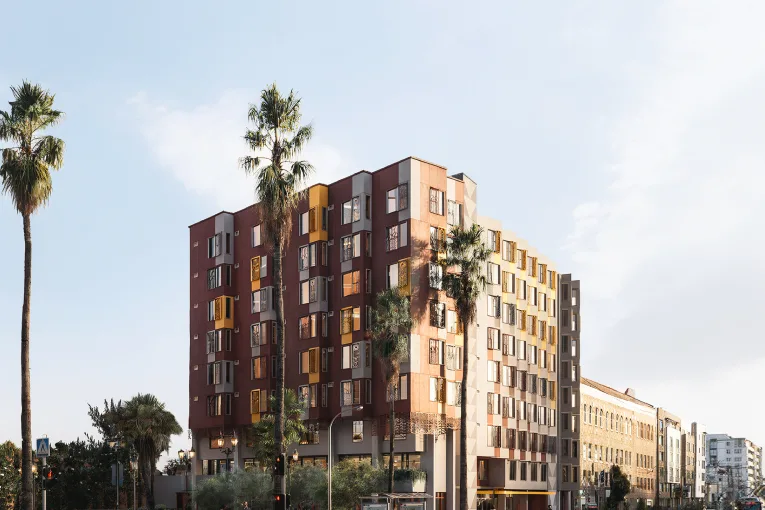
SAN FRANCISCO — A long-delayed affordable housing development in the Mission District is finally moving forward, underscoring how California’s housing policies and funding mechanisms are helping push through projects that have languished for years.
Construction is underway on a 136-unit building at 1979 Mission St., part of the larger “La Maravilla” project that will ultimately bring 382 affordable homes to the area near the 16th Street Mission BART Station, according to the San Francisco Chronicle.
The project, co-developed by Mission Housing Development Corp. and the Mission Economic Development Agency, replaces a site that had long stalled as a market-rate proposal amid community opposition and financing challenges, reflecting broader patterns across California where housing developments have struggled to move from proposal to construction.
“It’s more thankless than ever to be an affordable housing or permanent supportive housing developer — locally, state, federal, you name it — and it’s harder to get financing for these projects than it’s ever been in the history of our industry,” said Mission Housing Executive Director Sam Moss.
The project’s advancement comes after years of delays, but also amid increasing state-level pressure to produce housing, particularly affordable and supportive units, as California seeks to address its housing shortage.
“I pinch myself when I walk by at least once a day to see it. It was one of the hardest closings in history,” Moss said. “Everyone worked really hard the last three months of 2025 and pulled off a not very small miracle, and closed all the funding that was needed. Now there’s a tangible building coming out of the ground that represents going on two decades of organizing and difficult work.”
The development is backed by a mix of public and private financing, including $61 million from the Mayor’s Office of Housing and Community Development, along with investments from multiple financial institutions.
“While it’s our first investment here in the Bay Area, this type, it will likely not be our last, and it’s really part of our larger strategy to really partner with these mission driven developers,” said Five Star Bank Executive Vice President DJ Kurtze.
“I see a lot of the issues from a different perspective,” Kurtze said. “It makes a lot of sense for a bank to invest in something like this as well, when you weigh all the other benefits to the community.”
Western Alliance Bank’s Mieke Holkeboer emphasized the broader impact of such investments.
“Projects that demonstrate clear community benefit, sound fundamentals, and alignment with local stakeholders are where we see the greatest opportunity to make a meaningful and lasting impact,” Holkeboer said.
Even as financing comes together, developers say the challenges extend beyond construction.
“It is a lot harder to run these buildings than to physically build them,” Moss said, noting the complexities of operating supportive housing for residents with high needs.
“We want to not only build one of the best permanent supportive housing buildings — we want to run it so that it stays nice and the surrounding neighborhood benefits as well,” he added.
Marcia Contreras, Mission Housing’s deputy executive director, said experience and partnerships are critical to success.
“Bringing the right partners to the table” and understanding the population being served is essential, she said.
City leaders have also voiced support for the project as part of broader efforts to expand housing supply.
“Our administration is working to deliver more affordable housing so the next generation of San Franciscans can raise their families in the city they love,” Mayor Daniel Lurie said.
“This project will provide stability for residents while strengthening the Mission community and delivering the affordable homes that San Franciscans have long needed,” Lurie added.
The project’s progression highlights how a combination of state housing mandates, local funding commitments, and sustained advocacy can revive developments that once appeared stalled indefinitely, turning long-contested sites into active construction zones.
Follow the Vanguard on Social Media – X, Instagram and Facebook. Subscribe the Vanguard News letters. To make a tax-deductible donation, please visit davisvanguard.org/donate or give directly through ActBlue. Your support will ensure that the vital work of the Vanguard continues.
