
By Malik Washington, Destination Freedom Media Group | The Davis Vanguard
“At a community forum in Bayview-Hunters Point, candidates confronted decades of unanswered questions about housing, environmental justice, public safety, and the future of San Francisco’s southeast neighborhoods.”
The applause was polite. The questions were not.
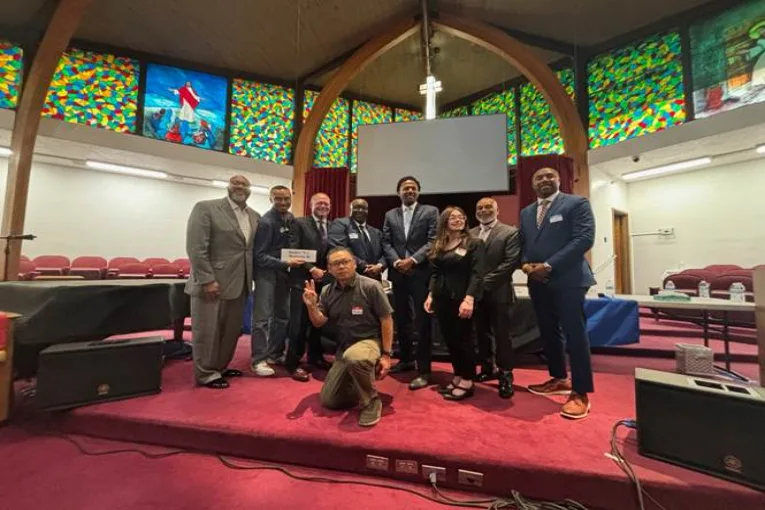
Inside Providence Baptist Church, where generations of Bayview-Hunters Point residents have gathered for worship, organizing, and civic life, seven candidates seeking to become San Francisco’s next District 10 Supervisor stood before a community that has spent decades waiting for promises to become policy.
The forum, organized by the District 10 Coalition of Accountability and moderated by Dexter Hall of the Providence Foundation, was notable not because candidates attacked one another—they largely did not—but because residents refused to let the conversation drift into campaign slogans. Every major question had been submitted by members of the community, and together they painted a portrait of a district still wrestling with the consequences of disinvestment, redevelopment, environmental contamination, transportation inequities, housing instability, and economic exclusion.
By the end of the evening, one reality had become unmistakable. District 10 was not searching for the perfect speech.
It was searching for evidence that someone seeking public office understood the weight of its history.
A NEIGHBORHOOD WITH A LONG MEMORY
Political campaigns often begin by asking voters to imagine the future. This forum repeatedly returned to the past. That is understandable.
Bayview-Hunters Point has long occupied a unique place in San Francisco’s history. It became home to wartime shipbuilding, generations of African American families who migrated during World War II, heavy industry, public housing, and later, one of the nation’s most closely watched Superfund sites. Residents have experienced redevelopment plans, school closures, economic shifts, and repeated promises of revitalization while continuing to raise questions about environmental health, public investment, and equal access to opportunity.
Those realities shaped every topic discussed.
Housing was not simply about constructing units.
Transit was not simply about buses and trains.
Public safety was not simply about policing.
Environmental justice was not simply about contamination.
Each issue reflected a larger question: whether District 10 receives the same urgency, resources, and governmental attention afforded to other parts of San Francisco.
DIFFERENT ROADS TO THE SAME DIAGNOSIS
Although the candidates offered distinct visions of leadership, they shared an unusually broad agreement on one point: District 10 continues to face longstanding structural challenges that require stronger government action.
Where they differed was in how to respond.
Theo Ellington repeatedly emphasized executive experience, affordable housing production, homeownership opportunities, and creating pathways for long-term wealth within the community. Throughout the evening, he argued that government should be judged by its ability to deliver measurable results. However, one of the key highlights during his answers was Ellington’s strong support for the Black church and making the case that the Black church is capable of addressing and healing every ill that plagues community members in Bayview-Hunters Point.
D.J. Brookter returned again and again to a different theme: implementation. Rather than calling for entirely new strategies, he argued that District 10 already possesses plans, partnerships, and community recommendations that require sustained execution and institutional accountability. Mr. Brookter was the only candidate that repeated the six community demands listed in the call-to-action issued recently by the Marie Harrison Community Foundation and Greeaction for Health and Environmental Justice that Mayor Daniel Lurie has not answered as of yet.
‘Toxic Land’: Protest Targets SF Housing Plans at Contaminated Hunters Point Naval Shipyard
J.R. Eppler frequently focused on infrastructure, transportation, and measurable public benchmarks, offering specific commitments regarding transit improvements while discussing neighborhood connectivity and public investment.
Shawn Richards grounded much of his campaign in decades of violence-prevention work through Brothers Against Guns, emphasizing mentorship, intervention, youth opportunity, and community relationships as essential components of public safety.
Jessica Pessecow consistently approached policy through the lens of public health, transparency, administrative reform, and improving residents’ access to government services.
Pearci “PJ” Bastiany III presented an expansive agenda spanning housing, transportation, renewable energy, maritime redevelopment, environmental policy, youth programming, and economic development, often advocating structural reforms extending beyond traditional municipal policy.
Mike Lin emphasized technology, innovation, entrepreneurship, and modernizing public systems while discussing transportation, public safety, and economic development.
Rather than exposing deep ideological divisions, the forum revealed contrasting theories of governance: executive management, implementation, infrastructure performance, grassroots organizing, administrative reform, technological innovation, and structural redevelopment.
ENVIRONMENTAL JUSTICE EMERGES AS THE DEFINING ISSUE
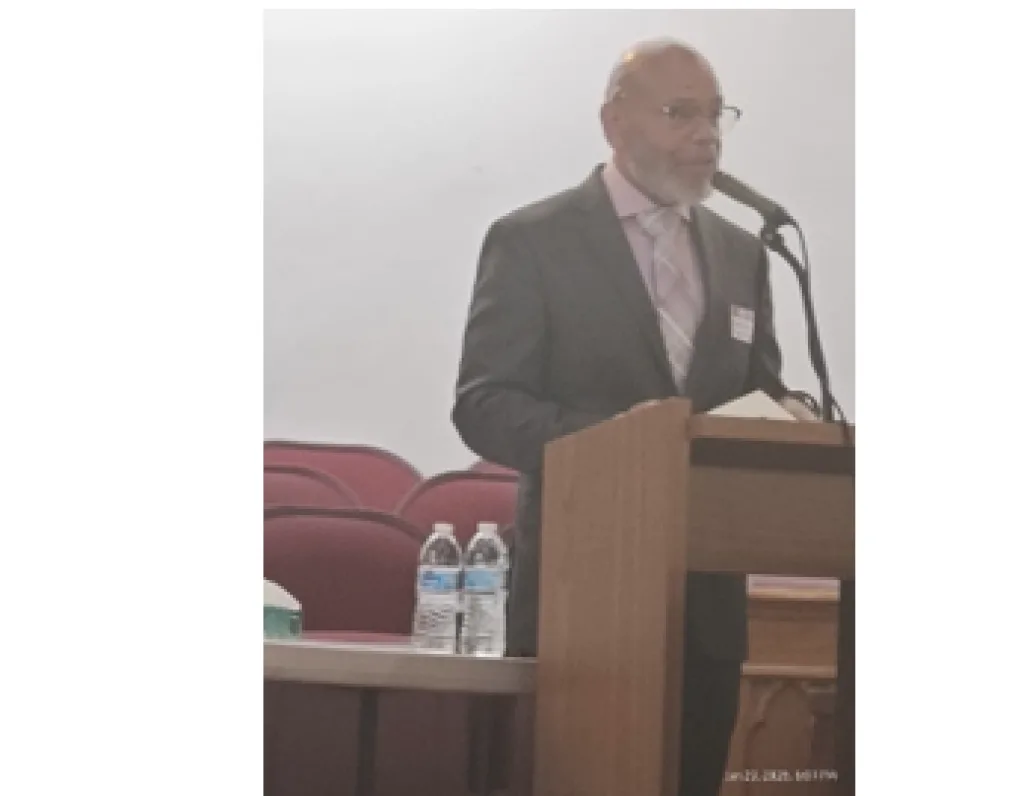
Moderator, Dexter Hall
No subject carried greater emotional weight than environmental justice. When moderator Dexter Hall asked candidates how they would address pollution, the Hunters Point Naval Shipyard, diesel emissions, industrial impacts, and government accountability, the tone in the room shifted.
The discussion moved beyond campaign messaging into the lived experiences of a community that has spent decades confronting questions surrounding contamination, cleanup, redevelopment, and public health.
Candidates approached the issue from different perspectives. Some emphasized public health monitoring, others independent oversight, redevelopment policy, renewable energy, or stronger coordination among public agencies. Several spoke about transparency and the need for government institutions to earn public trust.
The discussion reflected the broader context surrounding the Hunters Point Naval Shipyard, where environmental concerns, cleanup efforts, and redevelopment have remained matters of public debate for many years.
A NOTABLE GAP IN THE DISCUSSION
One aspect of the environmental discussion stood out.
Only days before the forum, environmental justice advocates and community organizations had gathered at San Francisco City Hall to call for stronger action regarding ongoing concerns at the Hunters Point Naval Shipyard. Several candidates participating in the forum had attended that event.
During the debate itself, candidates devoted considerable attention to the U.S. Navy, environmental contamination, public health, and regulatory oversight.
By comparison, there was relatively little discussion of the role the Mayor’s Office could play in coordinating city agencies, advocating for residents, or exercising municipal leadership alongside state and federal partners.
That omission does not diminish the significant responsibilities of federal agencies involved in the Shipyard cleanup. Rather, it highlights an additional question that remains relevant to District 10 residents: how City Hall intends to use its own authority to advocate for community health, transparency, and accountability.
ACCOUNTABILITY AS THE CENTRAL QUESTION
The evening’s most revealing exchange came near its conclusion. Rather than asking candidates about their values or campaign priorities, Hall posed a more direct challenge.
What measurable outcome would they be willing to be judged on within their first two years in office?
The answers varied. Some identified specific policy goals. Others emphasized accessibility, community meetings, or continued public engagement.
The significance of the question, however, extended beyond the individual responses.
For a district that has witnessed decades of redevelopment plans, transportation studies, environmental reviews, and political commitments, accountability itself has become an issue.
Editor’s Note: Journalist Malik Washington is also a Coordinator with the Marie Harrison Community Foundation Inc., an environmental and social justice organization.
Residents were not simply asking candidates what they hoped to accomplish. They were asking how success—or failure—should be measured.
BEYOND CAMPAIGN SEASON
As the forum concluded, the candidates thanked the audience, shook hands, and encouraged residents to remain engaged.
The questions, however, remain:
Will long-promised housing create lasting opportunities for existing residents?
Will public transit become more reliable and equitable?
Will small businesses along Third Street experience sustained investment?
Will young people see expanded educational and employment pathways?
Will environmental health concerns receive continued public attention?
And perhaps most importantly, will the next supervisor be able to transform decades of planning into measurable progress?
Those questions cannot be answered in a single campaign forum. Nor will they be resolved by a single election. But for one evening inside Providence Baptist Church, District 10 demonstrated that it intends to judge its future leaders not simply by the stories they tell, but by the results they deliver.
In a neighborhood with a long memory, promises are remembered.
So are outcomes.

ABOUT THE AUTHOR
Malik Washington is a San Francisco-based journalist and co-founder of Destination Freedom Media Group, an independent nonprofit newsroom dedicated to accountability reporting at the intersection of civil rights, public integrity, disability justice, structural accountability within American institutions, and community survival. He has been a published journalist for over 14 years.
His work—published in partnership with the Davis Vanguard—focuses on government power, criminal justice, environmental justice, and the human consequences of policy decisions too often insulated from public scrutiny. Washington’s reporting amplifies the voices of impacted communities while insisting on documentary evidence, transparency, and the unvarnished truth—especially when institutions demand silence.
His work appears on platforms such as Muck Rack and Black Voice News, examining the intersection of justice, governance, and community.
You can reach him via email: mwashington2059@gmail.com or call him at (719) 715-9592.
Facebook: facebook.com/destfreedom13
Instagram: @destinationfreedom13
X: @dest_freedom
Follow the Vanguard on Social Media – X, Instagram and Facebook. Subscribe the Vanguard News letters. To make a tax-deductible donation, please visit davisvanguard.org/donate or give directly through ActBlue. Your support will ensure that the vital work of the Vanguard continues.
