
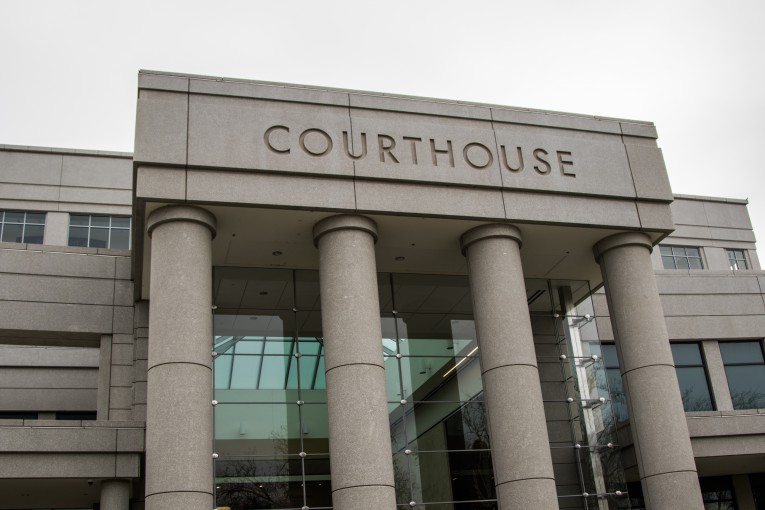
WOODLAND, Calif. — A Yolo County man was sentenced to four years in state prison for stealing a sandwich valued at $10.93 after a judge declined to dismiss a prior strike conviction, despite acknowledging that the underlying offense was minor and that the accused had struggled with mental health and substance use issues.
The June 18 sentencing hearing before Yolo County Superior Court Judge Daniel P. Maguire demonstrated how California’s three-strikes law can substantially increase punishment for a relatively minor, nonviolent offense when a person has a qualifying prior conviction.
The defense argued that imposing a lengthy prison sentence for stealing food was fundamentally unjust, particularly given the accused’s history of poverty and mental health challenges. Prosecutors countered that his repeated theft-related offenses and unsuccessful participation in treatment programs justified a substantial prison sentence.
Maguire ultimately rejected the defense’s request to dismiss the prior strike, concluding that the accused’s persistent criminal history and unsuccessful rehabilitation efforts outweighed the mitigating circumstances.
However, the judge also rejected the six-year upper-term sentence sought by the prosecution, finding it excessive under the circumstances.
The case was among those discussed in an interview with Yolo County Public Defender Tracie Olson concerning the criminal legal system and the challenges facing people experiencing poverty, mental health difficulties and substance use disorders.
Deputy Public Defender Roberto Villa Olivas urged the court to exercise its discretion under People v. Superior Court (Romero) to dismiss the prior strike for sentencing purposes.
Villa Olivas argued that the current offense involved stealing food rather than committing a violent crime and that applying the three-strikes law would produce a punishment disproportionate to the conduct.
“When we look at the current offense, which is stealing a sandwich to eat, it’s a minor, nonviolent act,” Villa Olivas told the court. “And it’s the defense’s position that rigidly applying the three strikes law in this case falls outside the spirit of the statute.”
The defense also submitted a report prepared by an individual identified during the hearing as working with the Public Defender’s Office, describing the accused’s background and circumstances surrounding his 2018 strike conviction.
Maguire acknowledged the report and described it as an important source of mitigating information.
Deputy District Attorney Zachary Gazda opposed dismissing the prior strike, arguing that the accused had continued committing theft-related offenses since his earlier conviction.
“We have 16 charges in Yolo County alone,” Gazda told the court. “This is someone who is a repeat offender. I do not think the Court should strike the strike.”
Maguire agreed that the current offense was minor and said the defense’s background report provided important context.
“So the present offense is minor,” Maguire said. “I think that that is apparent. That counts certainly in his favor.”
The judge nevertheless expressed concern about the accused’s record and previous opportunities to participate in treatment programs.
Maguire said the accused had participated in mental health court beginning in 2018, had been placed at Walter’s House multiple times and had attended another program in 2019.
Maguire said the accused’s performance in those programs had been poor, including instances in which he left treatment shortly after entering.
The judge concluded that these unsuccessful interventions weighed against dismissing the strike.
“And so while I think the mitigating factors are important for the Court to consider, as is the circumstances of the offense, given that he’s had numerous chances for more lenient treatment, including treatment to address the mental health and substance abuse issues, he hasn’t availed himself of it,” Maguire said.
The judge denied the Romero motion, leaving the prior strike in place and requiring the applicable prison term to be doubled.
The hearing then turned to the length of the sentence.
Gazda urged the court to impose the upper term, which would have resulted in six years in state prison because of the prior strike.
“Really, we’re at the end of the line for Mr. Lara,” Gazda said, referring to the accused. “We’ve had almost a decade now trying to get him to engage in treatment.”
Villa Olivas responded that the accused’s criminal history largely involved offenses associated with poverty rather than violence.
“The majority of Mr. Lara’s criminal history are related to crimes of poverty,” Villa Olivas said. “These aren’t crimes of violence, and the amount at issue in this case was $10.93.”
The defense attorney challenged the proportionality of the proposed punishment.
“And so sentencing Mr. Lara to state prison for six years just seems fundamentally unfair and not just,” he said.
Villa Olivas asked the court to find that the circumstances constituted an unusual case warranting probation and a suspended prison sentence despite statutory restrictions.
Alternatively, he requested the lower prison term.
“I mean, low term for stealing food, I mean, if that’s the way the Court views a fair outcome in this case,” Villa Olivas said.
Maguire declined to find that the case qualified for probation, again citing the accused’s criminal history and unsuccessful treatment efforts.
The judge acknowledged several mitigating factors, including mental health concerns, substance use and the circumstances of the accused’s upbringing.
He also identified aggravating factors, including numerous prior convictions, a previous prison term and unsuccessful completion of earlier supervision.
Maguire explained that the accused’s failure to participate successfully in rehabilitation programs had been central to his decision not to dismiss the strike.
But he said he would not use the same circumstances a second time to justify the maximum prison term.
“Having denied the Romero, I do think six years is excessive,” Maguire said.
The judge imposed the middle term of two years, doubled to four years because of the prior strike.
The sentence was to be served in the California Department of Corrections and Rehabilitation.
The court also imposed a concurrent five-day sentence on a misdemeanor conviction for possession of drug paraphernalia. Another count had been dismissed.
The accused received 449 days of custody credits in the principal case, consisting of 225 actual days and 224 conduct credits.
Maguire waived certain court assessments after confirming that the accused was indigent, but imposed a $300 restitution fine and a suspended $300 parole revocation fine.
The judge also recommended substance use treatment during incarceration.
Before concluding the hearing, Maguire directly addressed the accused about his previous rehabilitation efforts and the possibility of future treatment.
“The Court has imposed a prison sentence based on his failure to engage in earlier efforts to rehabilitate,” Maguire said. “But Mr. Lara, you’ll have other chances, and I really do hope that you will take advantage of that.”
In a separate community supervision matter, Maguire terminated supervision unsuccessfully without imposing additional custody time.
To comment please go to one of these social media platforms:
Facebook: https://www.facebook.com/DavisVanguard
LinkedIn: https://www.linkedin.com/company/peoples-vanguard-of-davis-inc/
Instagram: https://www.instagram.com/davisvanguard/
X: https://x.com/davisvanguard
Bluesky: https://bsky.app/profile/vanguardnewsgroup.bsky.social
Subscribe to the Vanguard News letters. To make a tax-deductible donation, please visit davisvanguard.org/donate or give directly through ActBlue. Your support will ensure that the vital work of the Vanguard continues.
