
by Josiah Olguin
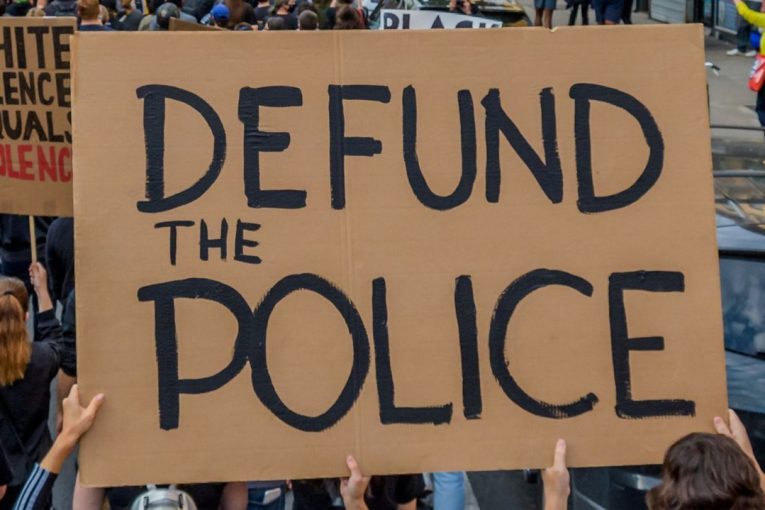
LONG ISLAND, N.Y. — President Donald Trump traveled to Long Island on Aug. 14, 2026, to deliver an address at the Nassau County Police Academy, highlighting recent declines in federal crime data while accusing Democrats of supporting efforts to defund the police, even as an analysis of government spending data suggests widespread police defunding never occurred.
During his address, Trump touched on newly released Federal Bureau of Investigation data, which showed that the homicide rate in the United States has dropped to its lowest level in 75 years. He also highlighted data showing overall violent crime had decreased by 9.3% since last year.
Trump also began criticizing several Democrats, including former President Joe Biden, New York Gov. Kathy Hochul and New York Attorney General Letitia James. He referred to Biden as “Sloppy Joe” and called James “a real slob” and “a disgrace.”
James previously brought a civil fraud lawsuit against Trump, the Trump Organization and other defendants, alleging that Trump had falsely inflated his net worth by billions of dollars to obtain more favorable loan and insurance terms and other financial benefits.
Trump additionally accused Democrats of supporting efforts to defund the police, stating, “We call them Dumb-ocrats now because their policies are so dumb. Fighting to defund the police.”
However, a recent analysis by John Pfaff, a law professor at Fordham University School of Law, showed something much different.
In his report, he examined different aspects of police spending at the local and state levels using the Census Bureau’s annual State and Local Government Finance Dataset.
Pfaff discovered that, at the national level, there was a slight decrease in police spending from 1980 to 2021 but found that there was an “increase in percent of direct expenditures going to police,” which he explains as “Covid-related financial struggles than an affirmative goal to scale back the governments’ focus on policing.”
As he examined state-level spending per 100,000 people, he found that states fell into two categories: constant growth or growth followed by a plateau. Through these reports, he found, “Basically no state shows any sign of even getting close to where they were in the early 1990s, when crime peaked.”
While some cities did reduce police budgets following the 2020 protests, many of those reductions were temporary.
For example, in Austin, Texas, the City Council reduced the budget by approximately $150 million, reallocating its funds toward housing programs, health care, family services and mental health programs. However, the following year, the budget increased by $9 million, from $434 million to $443 million for the 2021-22 fiscal year.
Pfaff goes on to discuss all direct expenditures and how some states show that they are at or below where they were in the 1980s, but he explains that these are just declines in the share of the budget.
Additionally, he further clarifies these numbers by stating that “for most states, the increases in real per-capita spending seen above reflect the police taking up growing shares of total expenditures. And in most states, if there was any decline in 2021, it wasn’t enough to offset the growth that had come before.”
Therefore, while some individual cities reduced police budgets, Pfaff’s analysis suggests that widespread police defunding did not occur at the state or national level.
With midterm elections coming up, the debate continues over whether communities should invest more heavily in traditional policing or redirect resources toward their communities. Yet, as Pfaff ends his article, he states that “at any sort of aggregate level, defunding simply did not occur.”
To comment please go to one of these social media platforms:
Facebook: https://www.facebook.com/DavisVanguard
LinkedIn: https://www.linkedin.com/company/peoples-vanguard-of-davis-inc/
Instagram: https://www.instagram.com/davisvanguard/
X: https://x.com/davisvanguard
Bluesky: https://bsky.app/profile/vanguardnewsgroup.bsky.social
Subscribe to the Vanguard News letters. To make a tax-deductible donation, please visit davisvanguard.org/donate or give directly through ActBlue. Your support will ensure that the vital work of the Vanguard continues.
