
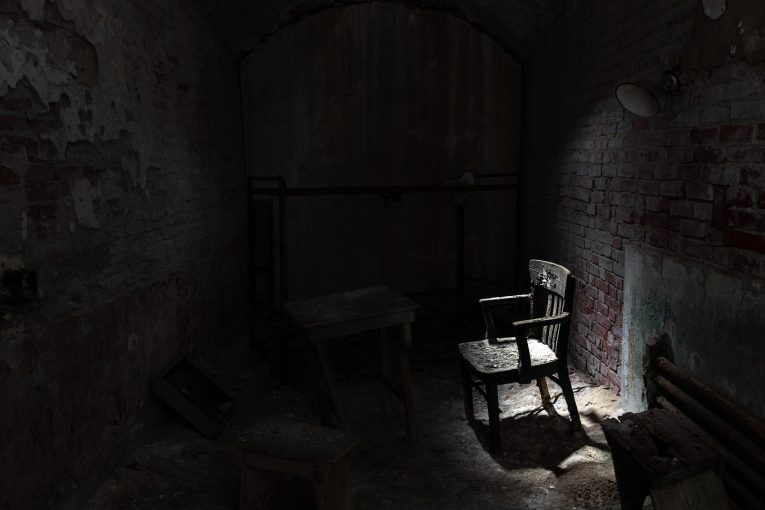
In early July, senior writer and editor for Solitary Watch, Katie Rose Quandt, released an article exposing the connection between solitary confinement and suicides in U.S. prisons and jails.
Quandt began by detailing the case of Markwhan Kitcher-Tucker, a 28-year-old man with schizophrenia who was arrested for theft and taken to a San Francisco County jail in April 2020.
He was moved to solitary confinement in August after conflicts with staff and others in custody, despite court records indicating signs of worsening mental health.
According to Solitary Watch, Kitcher-Tucker spent the next several months in a solitary cell. He showed signs of stability during brief stays in a secure hospital ward, but deteriorated again once returned to isolation. Quandt reported that assessments alternated in declaring him both competent and incompetent to stand trial.
Quandt noted that medical staff failed to create a treatment plan or meet his request for daily conversations with someone for an hour. Though he began expressing suicidal thoughts and refusing medication, psychiatric prescriptions were discontinued in late December, further reducing human contact.
On Jan. 10, 2021, Kitcher-Tucker was found hanging by a sheet from the top bunk of his solitary confinement cell, according to Solitary Watch. His parents sued, and the San Francisco Board of Supervisors agreed to settle for $2.88 million.
“Kitcher-Tucker’s tragic story is all too common in jails and prisons, where severe mental illness and the torture of solitary confinement combine to put people at heightened risk of suicide,” Quandt wrote.
Solitary Watch emphasized that placing people with mental illness in solitary confinement can be a matter of life and death. Yet, politicians—including prominent Democrats—continue to block reforms or fail to enforce existing restrictions.
Quandt highlighted that the rising number of deaths in custody has already been recognized by journalists, advocates and elected officials. Mortality rates in jails and state prisons rose throughout the 2010s. In 2019, the suicide rate in jails was more than twice that of the general public, while deaths surged during the pandemic.
“Although the federal Death in Custody Reporting Act of 2013 instructs the Department of Justice to collect and compile data on deaths in jails and prisons around the country, many jurisdictions fail to comply, or artificially lower their death count by transferring or releasing people just before death,” Quandt wrote.
A congressional investigation found that nearly 1,000 deaths in jails and state prisons in 2021 went unreported. Only three states—California, Florida and Kansas—reported whether individuals who died by suicide were in solitary at the time.
The article noted that an estimated 80,000 people were held in solitary confinement in state and federal prisons on any given day in 2019, with another 42,000 held in solitary in jails.
Black people and other people of color—already overrepresented in the incarcerated population—are disproportionately subjected to solitary confinement, often for the same behavior as white individuals, Solitary Watch reported.
Quandt added that many facilities impose “lockdowns,” confining people to their cells for extended periods, replicating conditions of solitary confinement for even more individuals.
Solitary confinement worsens symptoms of mental illness, Quandt wrote. Even people with no prior mental health history often develop symptoms such as depression or anxiety. Solitary Watch noted that the United Nations prohibits solitary confinement for individuals with mental illness.
“Yet, without a robust social safety net, prisons and jails have become a catchall solution for people struggling with mental health issues, addiction, and poverty. And frequently, mental illness-related behavior and outbursts get people thrown into solitary,” Quandt wrote.
The article emphasized growing evidence showing the frequency of suicides in solitary.
In February 2024, the DOJ’s inspector general published an investigation of deaths in federal prisons and found that of 187 suicides investigated, 46 percent occurred in restrictive housing settings, including solitary.
Solitary Watch also cited two reports from the Washington State Office of the Corrections Ombuds, released in June and September 2024, which found that at least 176 people attempted suicide in solitary confinement in Washington prisons over the past decade. Fourteen died.
“These recent reports add to a growing body of evidence confirming the link between solitary confinement and suicide,” Quandt wrote.
