
By Journalist Malik Washington, Destination Freedom Media Group & The Davis Vanguard
San Francisco — Monday, December 22, 2025
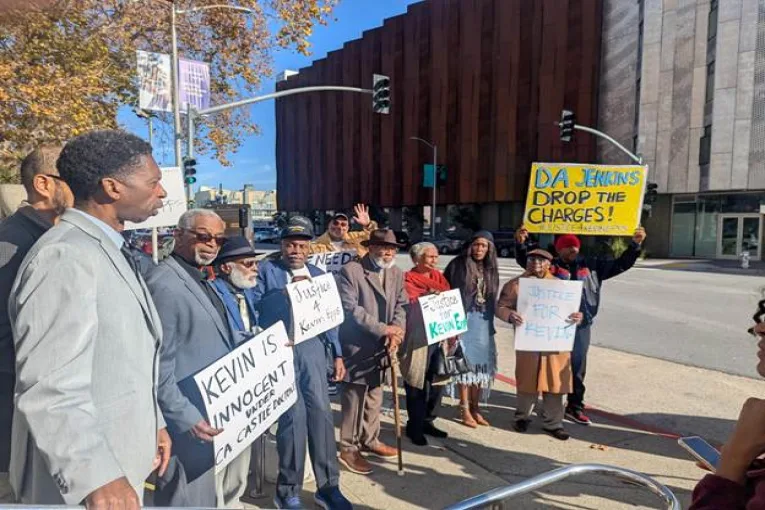
The Kevin Epps case did not unravel in a single moment. It unraveled slowly—after the verdict, after the cheers were silenced, after the jury was sent back again and again to do what it could not honestly do.
What the public saw as closure was, in fact, exposure.
In the days following the jury’s decision, a second and more revealing phase of the proceedings unfolded—one that stripped away rhetoric, tested the limits of judicial authority, and revealed just how far the prosecution was willing to push in search of condemnation rather than clarity.
This was not about relitigating guilt or innocence. It was about power: how it is exercised, how it resists restraint, and how it reacts when a jury refuses to cooperate.
Inside Department 13, the prosecution did not secure what it sought. Despite repeated efforts, loaded language, and judicial encouragement to keep deliberating, jurors declined to find most of the aggravating circumstances demanded of them. Three out of four collapsed under scrutiny. A mistrial was declared. The room went quiet—not with resolution, but with discomfort.
That discomfort matters.
Because when a jury resists pressure, when it returns empty-handed despite being sent back twice, it tells us something essential: the evidence has reached its limit, and narrative can no longer carry the weight the law requires.
What followed the verdict in the Kevin Epps case is not a footnote. It is the most revealing chapter yet—and one San Francisco cannot afford to ignore.
THE VERDICT — AND THE CONTRADICTION IT LEFT BEHIND
The jury’s initial findings were unmistakable.
Not Guilty of first-degree murder.
Not Guilty of second-degree murder.
Those verdicts mattered. They reflected a jury unconvinced by the prosecution’s claims of malice, premeditation, and intent to kill. In plain terms, the jury rejected the narrative that Kevin Epps was a murderer.
Moments later, however, the courtroom fell quiet as the clerk announced a Guilty verdict for voluntary manslaughter, followed by Guilty for felon in possession of a firearm.
Cheers erupted at the murder acquittals. The judge admonished the gallery. The moment passed. But the contradiction remained.
Under California law, voluntary manslaughter is not a compromise verdict. It requires proof—beyond a reasonable doubt—of either intent to kill or a conscious disregard for human life.
The question that now demands an honest answer is simple:
Where was that proof?
PHASE TWO: WHEN THE PROSECUTION OVERREACHED — AND THE JURY REFUSED
After the verdict, the case moved into Phase Two, where prosecutors sought to establish four aggravating factors tied primarily to the firearm conviction.
What happened next speaks louder than any closing argument.
The jury was hung on three of the four aggravating factors. Judge Brian L. Ferrall declared a mistrial on those issues.
This was not confusion. It was a failure of proof.
Despite repeated attempts by Assistant District Attorney Jonathan Schmidt to characterize Kevin Epps as exceptionally dangerous, jurors refused to endorse that portrayal. Only one aggravating factor remained—and even that factor is now under challenge.
“VICIOUS” AND “CALLOUS”: WHEN LANGUAGE REPLACES EVIDENCE
On Thursday, December 18, 2025, ADA Schmidt made one final attempt to secure harsher punishment. He leaned heavily on inflammatory language, describing Kevin Epps as “vicious” and “callous.”
In a courtroom, those words are not descriptive—they are strategic. Prosecutors use them to imply extreme cruelty, lack of empathy, and heightened danger, hoping to justify aggravating factors and harsher sentences.
But language is not evidence.
After weeks of testimony, the jury was not persuaded. The court dismissed the jury that day without additional findings. Kevin Epps was not remanded into custody.
The narrative collapsed.
WHEN THE COURT PRESSES — AND THE JURY PUSHES BACK
What troubled many observers was not only the prosecution’s persistence, but the court’s response.
Judge Ferrall twice sent the jury back to deliberate further, urging them to find additional aggravating circumstances—despite clear jury instructions and the jury’s stated position.
Each time, the jury returned unchanged.
They were not undecided.
They were not wavering.
They were finished.
This was a rare moment when a jury drew a boundary—and refused to cross it.
THE REMAINING AGGRAVATING FACTOR — AND WHY IT IS NOT SETTLED
The sole remaining aggravating factor stems from the felon-in-possession firearm conviction, a charge the defense openly conceded.
But conceding a charge does not concede aggravation.
Context matters:
The firearm was not used in a robbery or premeditated crime
There was no evidence of planning, trafficking, or criminal enterprise
There was no flight, evasion, or concealment
Kevin Epps remained at the scene and cooperated with authorities.
Most importantly, the jury rejected the prosecution’s broader theory of malice and danger.
That context will be central at the next stage.
THE UPCOMING ROMERO HEARING
Kevin Epps’s attorneys are expected to argue for the court to strike the remaining aggravating factor at a Romero hearing, anticipated in February 2026. A sentencing date has not yet been set.
A Romero hearing requires the court to consider the totality of circumstances—not just charges, but fairness, proportionality, and justice.
The outcome could determine whether Kevin Epps faces incarceration or a non-custodial sentence.
LETTERS OF SUPPORT NOW MATTER
As the case moves toward sentencing, letters of support are critical.
Please visit the Justice 4 Kevin Epps website for complete information on writing a letter to support Kevin Epps (deadline is January 15, 2026).
THE UNRESOLVED QUESTION OF PROSECUTORIAL CONDUCT
The mistrials did not occur in isolation.
Throughout this case, serious concerns have been raised regarding ADA Jonathan Schmidt’s conduct, including:
Use of inflammatory language unsupported by evidence
Repeated leading questions
Selective framing or omission of exculpatory facts
Attempts to push jurors beyond the evidentiary record.
In a forthcoming installment, I will examine additional information that speaks directly to whether the guilty verdicts themselves may be vulnerable due to cumulative prosecutorial misconduct and judicial error.
THIS CASE IS STILL UNFOLDING
As of December 22, 2025, the Kevin Epps case remains unfinished.
Three aggravating factors failed
A mistrial was declared
One factor remains contested
A Romero hearing looms
Sentencing lies ahead
And hovering over it all is the question San Francisco must confront honestly:
Why was this case pursued so aggressively—when others were not?
The answer may shape not only Kevin Epps’s future, but public trust in the system itself.
I will continue to report.
Because justice does not end at a verdict—and it does not survive silence.
As always, here’s the song/video for our article:
J. Cole – Pride is the Devil feat. Lil’ Baby (Official Audio)
ABOUT THE AUTHOR
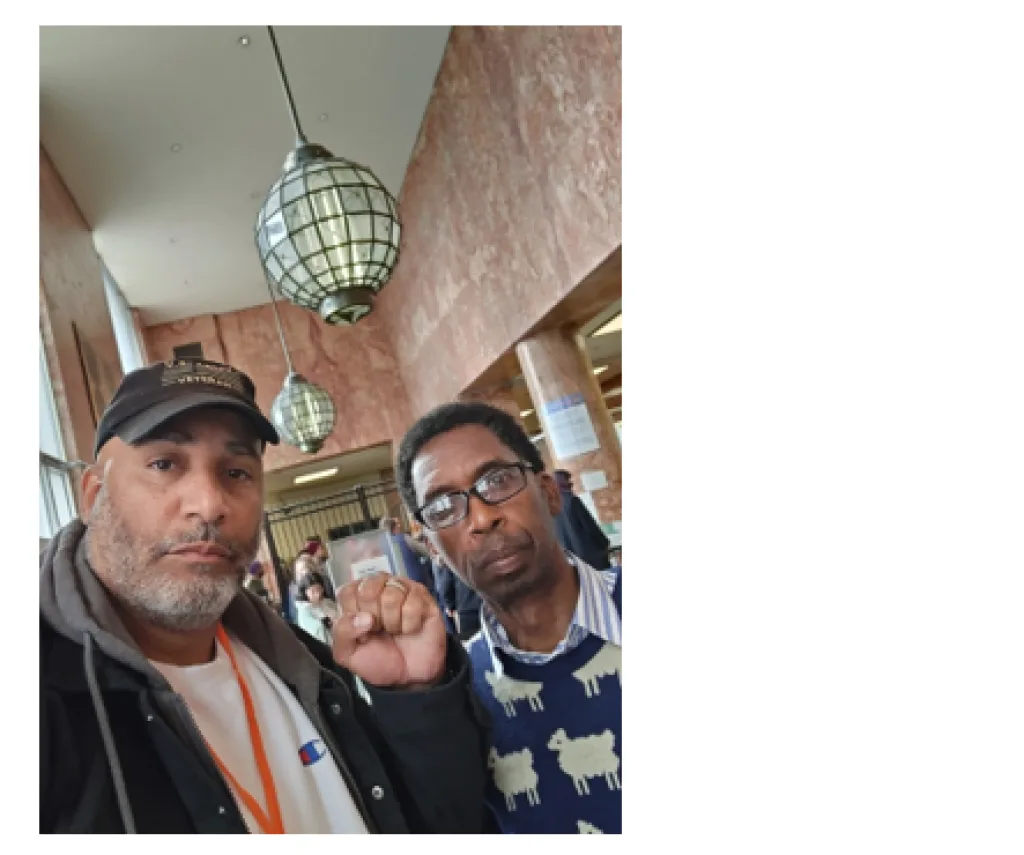
Malik Washington is a journalist, community advocate, and co-founder of Destination Freedom Media Group. He has been a published journalist for over 14 years. His reporting focuses on criminal justice, housing, environmental justice, and the lived experiences of communities too often marginalized or ignored. He is a regular contributor to the Davis Vanguard and other independent media outlets. You can reach him via email: mwashington2059@gmail.com or call him at (719) 715-9592.
Suggestions or leads on stories are always welcome.
Please follow us on:
Facebook: https://www.facebook.com/destfreedom13
Instagram: https://www.instagram.com/destinationfreedom13/
X: https://x.com/dest_freedom
Follow the Vanguard on Social Media – X, Instagram and Facebook. Subscribe the Vanguard News letters. To make a tax-deductible donation, please visit davisvanguard.org/donate or give directly through ActBlue. Your support will ensure that the vital work of the Vanguard continues.

Excellent synopsis! Washington brings succinct astute analysis to a case that will make history as an exercise in racial injustice.