
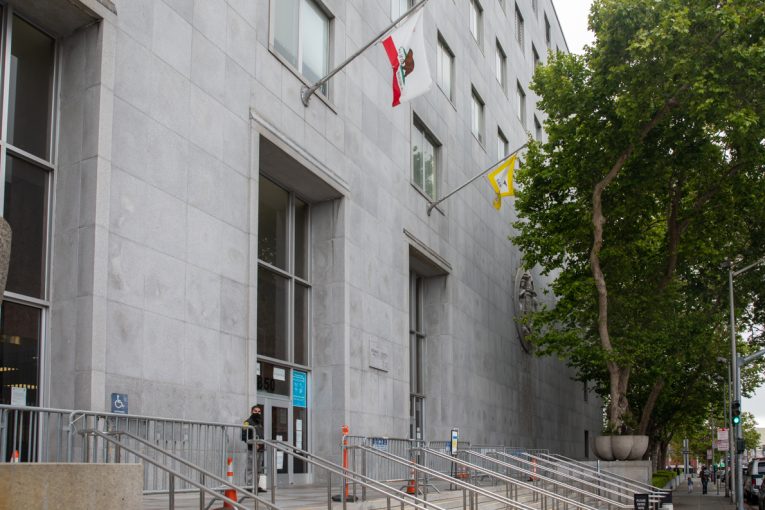
SAN FRANCISCO, Calif. — A Judge in San Francisco Superior Court this week grappled with the implications of the California Supreme Court’s recent Kowalczyk ruling, as defense attorneys challenged unattainable bail amounts in multiple cases before Judge Lianne Dumas.
The Kowalczyk decision significantly altered California’s approach to pretrial detention and money bail. Building on the earlier Humphrey ruling, the California Supreme Court held that courts cannot use unaffordable money bail as a method of detention because unattainable bail effectively functions as incarceration.
The ruling also reaffirmed that pretrial detention is constitutionally limited to certain serious categories of cases under Article I, Section 12 of the California Constitution.
During a recent webinar examining the ruling, Civil Rights Corps attorney Carson White explained that the court held “that it is not constitutional under the state and federal constitutions to set unaffordable money bail in any case.”
The ruling has already begun reshaping bail arguments in California courtrooms.
In one San Francisco case before Judge Dumas, defense counsel argued that the matter was fundamentally “a drug treatment case” and maintained there was “no public safety component” justifying continued detention.
The Deputy District Attorney opposed release, pointing to six open cases involving the accused, including an arson case, prior electronic monitoring concerns and what prosecutors described as an unwillingness to comply with court orders.
Judge Dumas ultimately declined to release the accused, citing the existence of multiple open cases and the arson allegations. However, the court acknowledged the impact of Kowalczyk and ruled that financial conditions required a reduction in bail.
Despite the reduction, the accused remained held on approximately $23,000 bail across the six pending matters.
Defense counsel argued the amount remained unattainable and therefore violated the constitutional standards outlined in Kowalczyk. Counsel also argued the accused was homeless and lacked assets or financial resources that would make release realistically possible.
Judge Dumas responded that the court needed additional factual information before making a final determination regarding the accused’s financial circumstances and ability to pay. The judge set a further hearing for Friday to receive evidence regarding bail and financial eligibility.
The arguments reflected several of the core constitutional principles emphasized in Kowalczyk. The California Supreme Court held that courts must evaluate whether an accused person is legally eligible for detention, whether the individual can realistically afford bail and whether less restrictive alternatives could reasonably address public safety or court appearance concerns before detention is imposed.
The court also ruled that unattainable bail cannot operate as a workaround for detention. During the webinar discussing the case, Osberg described the court’s reasoning by explaining that judges cannot effectively detain someone through impossible conditions while claiming they are being released.
A second hearing before Judge Dumas involved another oral motion by a deputy public defender seeking bail reduction under Kowalczyk.
In that matter, the judge reduced bail from $20,000 to $10,000 but declined to order release. According to the court, the accused’s multiple open cases and a pending Penal Code section 211 robbery case weighed against further reduction. Judge Dumas stated that the revised amount represented the “financial least restrictive option.”
The hearings illustrated how trial courts are beginning to operationalize Kowalczyk in real time while balancing constitutional standards with prosecutors’ public safety arguments.
During the webinar, speakers repeatedly stressed that the ruling does not eliminate pretrial detention entirely. Rather, it requires courts to make individualized findings regarding detention eligibility and ability to pay instead of relying solely on preset bail schedules.
The webinar also highlighted growing scrutiny of California’s traditional bail schedule system, under which charges are assigned automatic bail amounts without individualized analysis. Speakers argued that such systems historically allowed courts to detain people based primarily on poverty rather than dangerousness.
Civil Rights Corps attorney Alec Karakatsanis argued during the webinar that “an unattainable order of money bail that is a financial condition of pretrial release that you can’t pay is really the equivalent from your perspective of being detained.”
Legal advocates at the webinar predicted that implementation disputes will continue to emerge in counties throughout California as judges, prosecutors and defense attorneys interpret the new standards.
Raj Jayadev of Silicon Valley De-Bug warned that earlier bail reform rulings were not consistently implemented statewide and urged journalists and court observers to closely monitor arraignment hearings and detention decisions in the coming months.
The San Francisco hearings before Judge Dumas offered an early glimpse into how Kowalczyk may reshape routine bail litigation throughout California courts, particularly in cases involving indigent or unhoused accused persons who argue that even reduced bail amounts remain unattainable under the Constitution.
Follow the Vanguard on Social Media – X, Instagram and Facebook. Subscribe the Vanguard News letters. To make a tax-deductible donation, please visit davisvanguard.org/donate or give directly through ActBlue. Your support will ensure that the vital work of the Vanguard continues.