
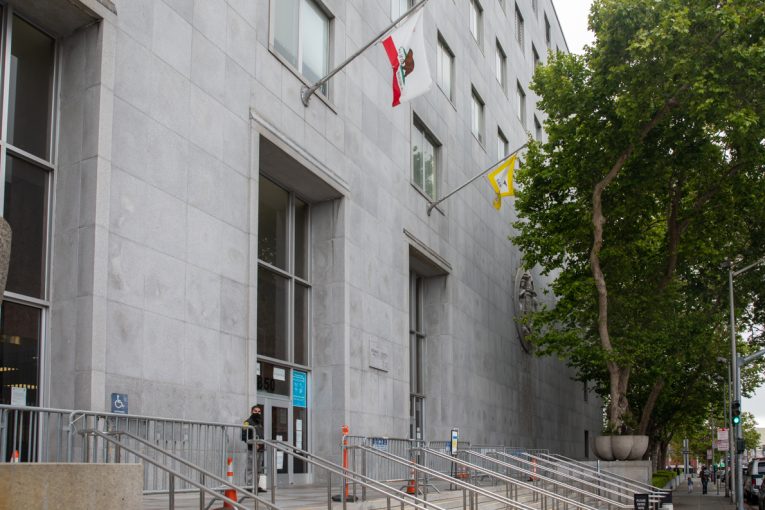
SAN FRANCISCO — During a June 23 trial in San Francisco Superior Court, Department 16, Judge Kenneth Wine sustained Assistant District Attorney Elizabeth Jimenez’s relevance objection to Deputy Public Defender Bonnie Chang-Silen’s attempted impeachment of Officer Artiga during cross-examination, preventing the defense from pursuing a line of questioning it argued was critical to establishing the foundation of the case.
Judge Wine sustained Assistant District Attorney Elizabeth Jimenez’s objection to PD Bonnie Chang-Silen’s 422 impeachment of Officer Artiga during cross-examination. Prosecutor Jimenez objected on the grounds of relevance; however, the impeachment was intended to establish essential details of the first response call and the interactions between law enforcement and the accused, which the defense argued were critical to creating the foundation of the case.
Impeachment occurs when an attorney seeks to discredit a witness’s testimony; this often exposes falsehoods, biases or reconciles memory lapses. This impeachment during Artiga’s cross-examination had the potential to provide critical information concerning the first response call made to the scene of the alleged crime; the defense argued that this testimony from the officer could help the jury form an accurate depiction of Officer Artiga’s mindset when responding to the scene.
His mindset, the defense argued, could have determined how subsequent responding officers perceived their safety and approach.
This was one among other noticeable imbalances during the trial. Chang-Silen’s cross-examination of Officer Artiga was repeatedly peppered with sustained objections, to the point that Judge Wine rejected an entire line of questioning, once again due to the supposed “irrelevance” of the following first responding officer’s statement.
Chang-Silen argued that this plethora of sustained objections “directly violated the accused’s due process rights, as the accused holds the constitutional right to observe all evidence against them.” DPD Chang-Silen explained this violation on the record after the jury had left the courtroom, to which Prosecutor Jimenez responded that she had also asked many objectionable questions, but the public defender did not object in time.
Judge Wine remarked that the public defender’s objections “would have been sustained.”
Public Defender John Paul Passaglia, who is second-chairing the trial, pushed back on this, stating, “I am not familiar with a law that allows the prosecutors to object to everything just because the Public Defenders did not.” The fact that the public defender did not object to the earlier testimony is irrelevant to whether the prosecutor’s objections were valid, Passaglia argued.
As a result of the constant objections, the jury was not allowed to hear significant parts of the defense that Chang-Silen contends are “leading up to [her] main argument,” and “clearly relevant to the [first responding] officer’s state of mind.” The Constitution, specifically the Sixth and Fourteenth Amendments, guarantees rights that are intended to protect individuals and their fundamental rights during trial and prosecution, and the defense firmly believed that these rights had not been adequately guaranteed by the court.
Follow the Vanguard on Social Media – X, Instagram and Facebook. Subscribe the Vanguard News letters. To make a tax-deductible donation, please visit davisvanguard.org/donate or give directly through ActBlue. Your support will ensure that the vital work of the Vanguard continues.
