
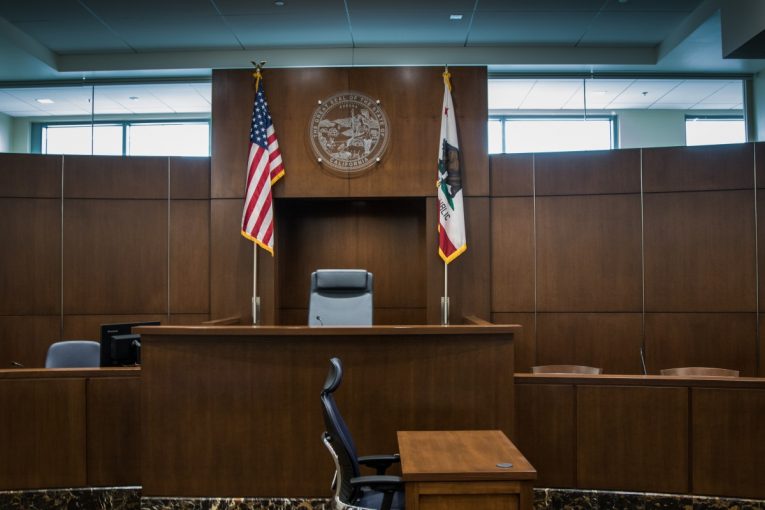
WOODLAND, Calif. — A Yolo County Superior Court judge on Thursday ordered a man accused of misdemeanor DUI into custody, rejecting a defense argument that the decision conflicted with the California Supreme Court’s recent ruling in In re Kowalczyk, which limits when courts may detain people accused of lower-level offenses before trial.
Judge Danette C. Brown ruled the accused posed a danger to public safety despite the misdemeanor classification of the charges, finding that his repeated DUI-related conduct while on probation justified detention under state law.
The accused faces three new misdemeanor charges: driving under the influence, driving with a blood-alcohol content of 0.08% or higher and driving on a suspended license. His blood-alcohol level tested at 0.186, and his breath test measured 0.17, more than twice the legal limit. He is also facing two probation violation cases tied to prior DUI convictions from April and October 2025, to which he pleaded no contest on Feb. 4.
Deputy Public Defender Matthew Rogers asked the court to release the accused. He argued that under In re Kowalczyk and the California Supreme Court’s 2018 ruling in In re Humphrey, pretrial detention is reserved for a narrow set of offenses that does not include misdemeanors.
“My client is entitled to the least restrictive means to ensure public safety,” Rogers told the court, adding that the accused had appeared for the hearing remotely by video and posed no flight risk.
Deputy District Attorney Michelle Serafin countered that argument. Serafin argued the accused’s continued drinking and driving while on probation for two prior DUI convictions demonstrated he would not comply with court orders.
Judge Brown agreed, finding under Penal Code Section 1275 that the accused posed a danger to public safety despite the misdemeanor classification of the charges. The judge acknowledged that Kowalczyk limits detention in misdemeanor cases but ruled that the public safety finding justified an exception.
Judge Brown noted the accused was already subject to a Secure Continuous Remote Alcohol Monitor, or SCRAM, alcohol-monitoring device, an ignition interlock device and an order to stay away from places that primarily sell alcohol — conditions that Judge Brown said had “not worked,” because the accused continued to drink and drive.
The judge said bail would be set at “a reasonably attainable amount” once the accused appeared in custody, though no amount was set at the hearing.
When told he would need to appear in Woodland that same afternoon, the accused, appearing by video, said he was working in the fields and had no way to get to court on short notice.
Judge Brown declined to excuse the appearance, instead ordering him to appear in person the following day at 1:30 p.m. to be taken into custody. The accused told the court his ride also would be unavailable by the time he could reach the courthouse that day.
Rogers said the public defender’s office would contact the accused before the following day’s hearing to discuss what he could afford.
The accused remained free on his own recognizance under his existing probation terms until his custody appearance, when the court is expected to set bail and address all three pending cases together.
Follow the Vanguard on Social Media – X, Instagram and Facebook. Subscribe the Vanguard News letters. To make a tax-deductible donation, please visit davisvanguard.org/donate or give directly through ActBlue. Your support will ensure that the vital work of the Vanguard continues.
