

A California custody case is preserved by a rare transcript, two federal lawsuits, a YouTube channel, a Nevada courtroom camera, and a father who has not seen his children in five years. This is part of ongoing coverage of California’s Court Reporter Crisis.
By Susan Bassi, Fred Johnson and Faith Strader
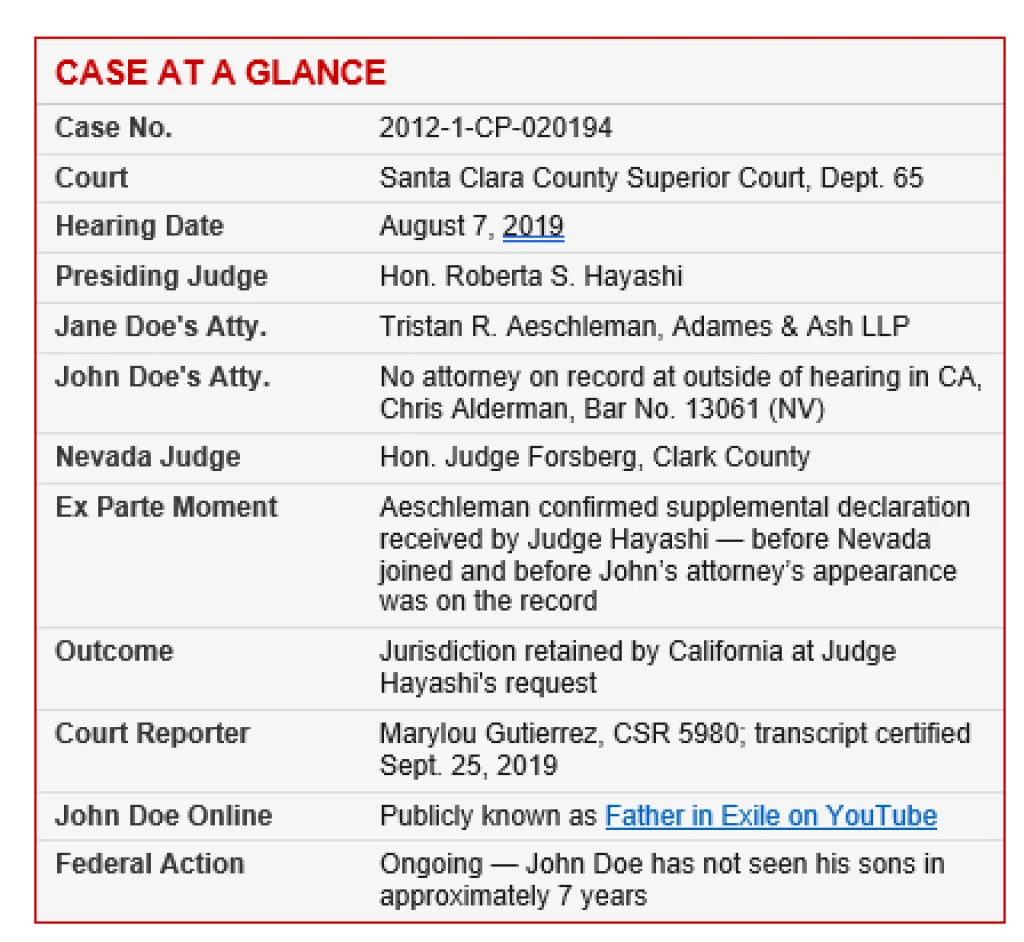
At first glance, his YouTube channel looks like every other family court channel. Oral arguments. Immunity hearings. Attorneys behave badly. Easy to swipe past.
Scroll long enough and you find bad dad jokes that end the same way.
“Love you, boys. Miss you.”
He hasn’t seen his sons since 2021. That was the last time he picked them up from school. He was arrested. California’s family courts swallowed the next five years.
Known publicly as Father in Exile, he documents his case from Nevada — where his children once filled his home with noise and where he was their primary parent. A military veteran. No criminal record. No history of domestic violence.
For this series, he is John Roe. His children’s mother is Jane.
The case has layers. Jane’s arrest for drunk driving with the children in the car. Two federal civil rights lawsuits. His complaints shredded by an attorney at the Santa Clara County Bar Association. Hundreds of thousands of dollars in attorney fees, court costs and transcripts. A separate fight just to see his own court file.
But what makes this case matter for this series comes down to thirty dollars.
In 2019, that fee bought a court reporter. After October 2020, when Santa Clara County eliminated official reporters from family law departments, that record was gone for every parent who came after him.
Today a private reporter costs $700 to $1,200 for a half-day hearing. Nevada records family court on camera for free.
John has both: a certified California transcript and a Nevada courtroom video of the same hearing, the same day, the same case.
The transcript caught what the camera could not see — Jane’s attorney and the judge discussing case filings before John’s attorney was on the California record. Before Nevada joined the call.
Ex parte communication. On the transcript. Provable.
Without that $30, it vanishes.
THE HEARING NEVADA COULD SEE, CALIFORNIA KEPT QUIET
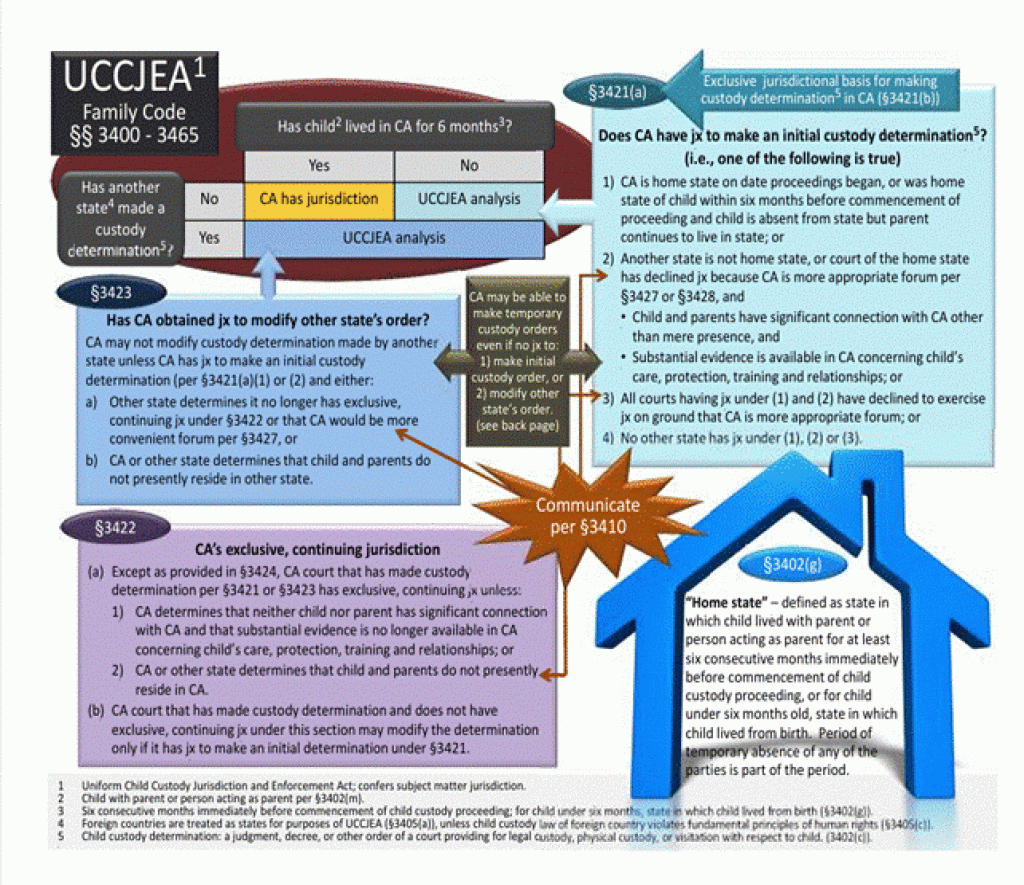
The 2019 hearing was set under the UCCJEA — the interstate law that determines which state controls a custody dispute. California on one side. Nevada on the other.
Nevada had cameras in its courtroom. California had court reporter Marylou Gutierrez. The hearing ran simultaneously on Court Call between San Jose’s Dept. 65 and Clark County — transcribed in one state, recorded on video in the other.
That dual record is rare. It means the transcript can be tested against what the camera saw. In this case, what the transcript caught and what the camera missed.
WHAT EX PARTE COMMUNICATIONS LOOK LIKE ON CAMERA
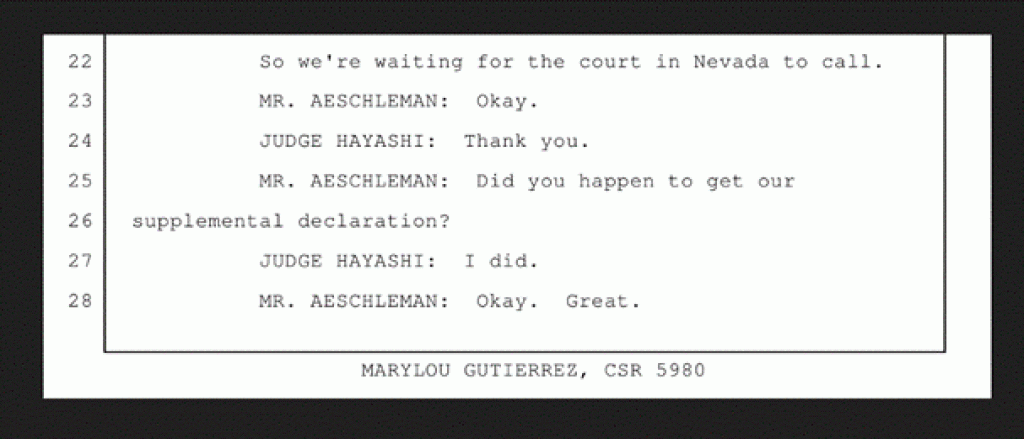
The transcript opens before the hearing formally begins.
Jane’s attorney, Tristan R. Aeschleman of Adames & Ash LLP, was in Dept. 65. No attorney for John Roe had appeared on the California record. Nevada was not yet on the call.
In that window, Aeschleman turned to Judge Roberta S. Hayashi and asked: “Did you happen to get our supplemental declaration?”
Judge Hayashi answered: “I did.”
One side. No opposing counsel. Nothing on record yet. That is ex parte communication. And it is on the transcript.
When Nevada joined the call moments later, the submission had already been received and confirmed.
When John’s Nevada attorney, Chris Alderman, asked for a continuance so that California counsel could file a competing brief, Aeschleman told the court the declaration had been emailed to Alderman ‘yesterday at 2 o’clock’ — the day before a hearing that would determine which state controlled the children’s future.
Judge Hayashi denied the request for additional time, stating the UCCJEA informal hearing procedure does not require a briefing schedule. That is technically accurate. However, it does not address why one side had filed a brief that the judge had already read before the other side could respond.
THE JUDGE WHO ALREADY HAD HER ANSWER
Once Nevada joined the 2019 hearing, the transcript captures a California hearing in which the judge who had received the one-sided submission proceeded to advocate the submitting party’s position.
Judge Hayashi told Nevada Judge Forsberg that her ‘tentative inclination’ was not to cede jurisdiction — a position that tracked Jane’s exparte declaration point for point. She walked through the mother’s tax returns, California employment, property ownership and driver’s license as if presenting neutral factual findings, not the contents of a brief she had received exparte that morning.
Judge Forsberg pushed back, respectfully but persistently. The children had attended school in Clark County for a full year. Jane had signed a lease, rented an apartment and registered to vote in Nevada — swearing under oath that she was a Nevada resident. One of the children had been born in Nevada.
Judge Hayashi minimized the voter registration, suggesting it might not reflect a true intent to change residency. She offered no legal standard for that conclusion.
When Alderman tried to make a fuller record for John, the judge ended the proceedings: ‘I have a 9 o’clock call in another case,’ she told Judge Forsberg. Alderman was mid-sentence. The Nevada judge deferred. Jurisdiction stayed in California.
Judge Forsberg’s parting words are themselves worth noting. Even as she agreed to cede jurisdiction, she said: ‘I just wanted us to explore it because, look, that was even your — when “Jane” states that she declared herself as a resident here by doing the voter registration, that’s where we got, you know, a little sideways on it, as you can imagine.’
Jane’s public court filings identify her by her legal name. Per Vanguard policy that name is withheld. Judge Forsberg was referring to the factual record before his court. Aeschleman has refused repeated requests for comments. In journalism, a “no comment” is a data point. In Santa Clara County family court, it has become a pattern.
$30 COURT CREATED TRANSCRIPTS BECOME EXHIBITS IN FEDERAL COURT
Nearly 25 years before Judge Hayashi would help decide the fate of two little boys attending elementary school in Nevada, former Santa Clara County Presiding Judge Jack Komar saw it coming.
As previously reported, Komar issued an internal reform document for Santa Clara County’s family court that reads today like a warning no one heeded.
He flagged what he called the cozy relationship between the bench and familiar local practitioners — the normalization of informal communications that threatened the court’s duty to decide custody independently. That duty, he wrote, was non-delegable. Informal processes undermined it.
Komar also warned about pro per litigants. He saw the numbers growing and understood what it meant: self-represented parents, navigating a system built by and for attorneys, would be overwhelmed by practitioners who knew how the courthouse worked and who had the judge’s ear.
Twenty-five years later, nothing has improved. Everything has gotten worse.
The self-represented population in California’s family courts keeps climbing. The crisis no longer belongs only to people who never had a lawyer.
Teachers. Nurses. Engineers. Doctors. Architects. They started with representation. They watched their savings disappear as months became years and years became decades — and when the money ran out, so did the record.
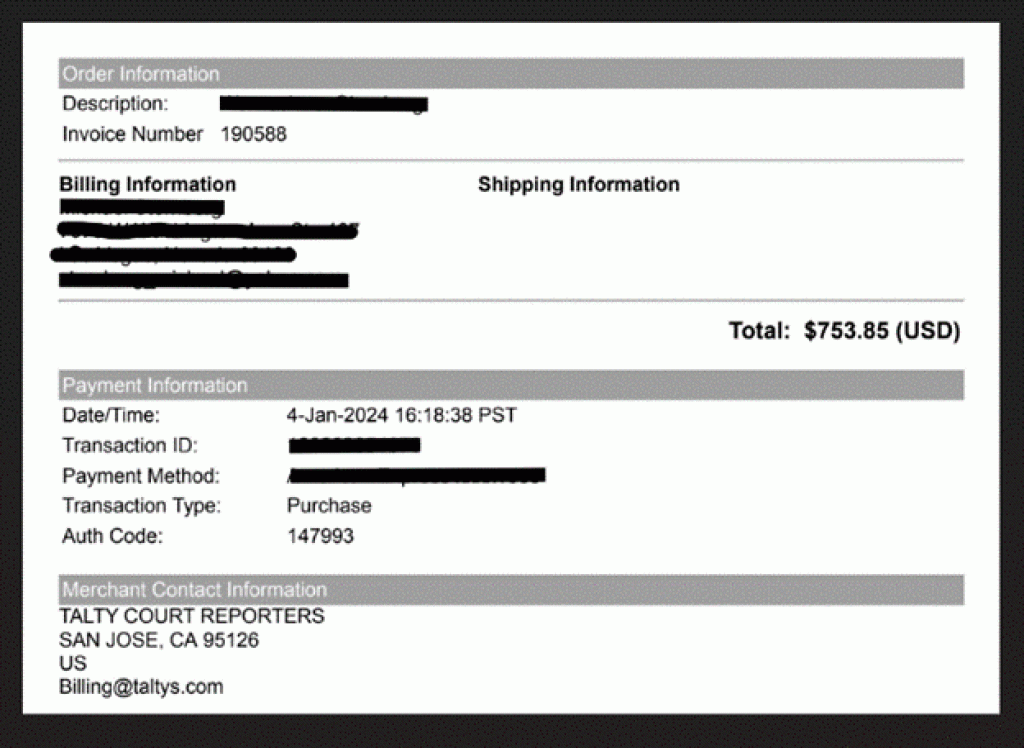
John Roe1 started with attorneys. He ended up litigating much of his case alone, fighting not just for his children but for access to his own court file — the same records that attorneys receive without question. The transcripts he managed to obtain along the way are now exhibits in his federal civil rights lawsuits.
WHAT THE COURT REPORTERS SWORE
In sworn declarations filed in the Family Violence Appellate Project v. Superior Court lawsuit, now pending before the California Supreme Court, court reporters from Santa Clara, Los Angeles, San Diego and Contra Costa counties described in specific detail how their courts dismantled official reporting infrastructure — often when reporters were available and willing to work, as previously reported.
The lawsuit, that has been pending in the California Supreme Court for nearly three years, will not resolve the injustices for the millions of people who had divorce, custody, domestic violence or probate cases in the past six years.
‘As guardians of the record, court reporters are the backbone of a functioning judicial system that gives everyone an equal shot at justice.’ — Melissa B. Buchman, declaration to the California Supreme Court, March 2025
Or for the millions more now have to pay private court reporters $2,200 for a full day of trial that the court used to assure for $30.
John Roe1 is a veteran. He has no criminal history. He has never been accused of domestic violence. None of those facts protected him in Santa Clara County family court, where Judges Hayashi and, later, Cindy Hendrickson presided over proceedings his documentation suggests consistently favored attorneys who were more friendly with the judges than the law intends for them to be.
Judge Hayashi was never publicly admonished by the Commission on Judicial Performance for misconduct as a public court judge. She has now retired from the public court bench and has gone to work in private judging for Signature Resolutions.
