
Op-Ed | Rebuttal to Village Farms Flood Control Claims
The Village Farms project in Davis lacks a comprehensive flood plan and relies on unproven engineering design principles, posing a major flood risk to the city and its residents.

The Village Farms project in Davis lacks a comprehensive flood plan and relies on unproven engineering design principles, posing a major flood risk to the city and its residents.
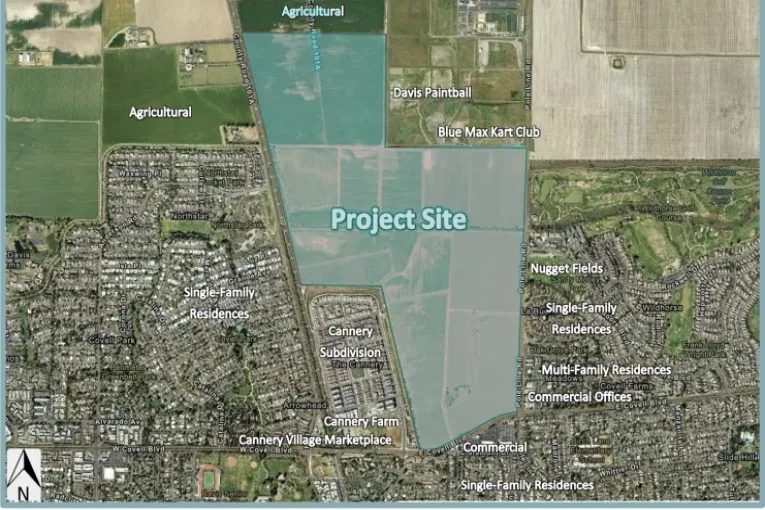
The Davis City Council’s pre-selection of alternatives for the Village Farms EIR, before the environmental impact analysis had even begun, has raised concerns about potential bias and a lack of good faith in the process.
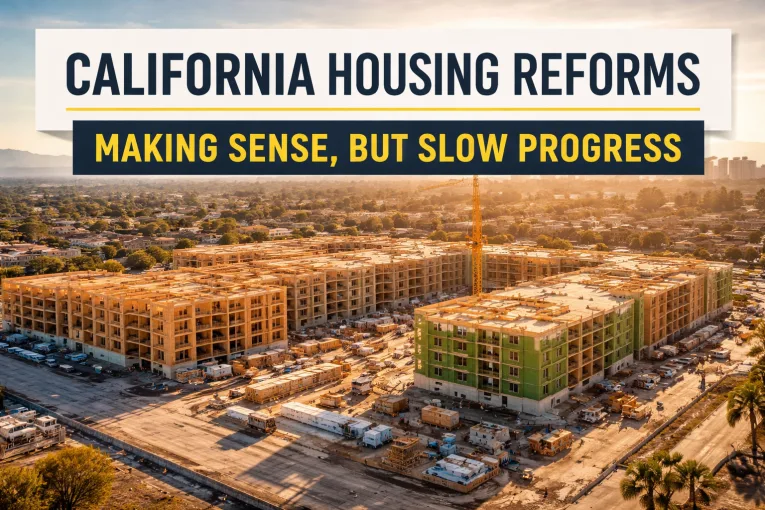
California’s housing reforms have failed to produce the desired results due to sluggish production, rising home prices, and structural barriers, according to an opinion column in Governing, which argues that the state needs to take more aggressive action to address the housing shortage.
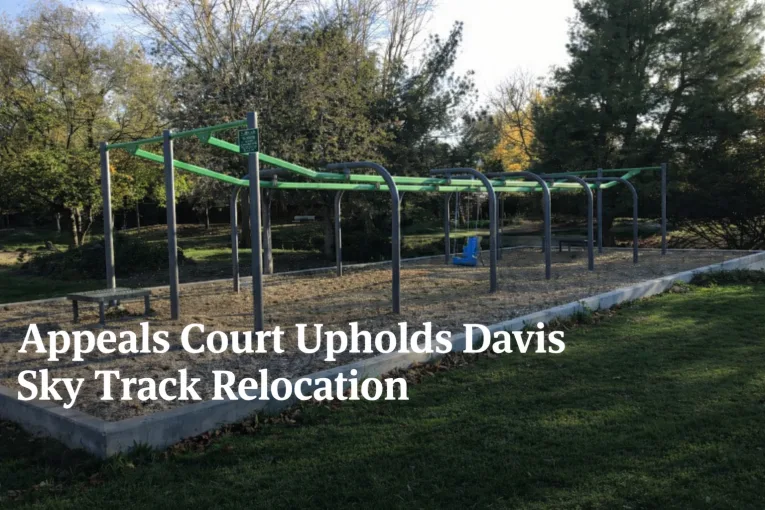
The California Court of Appeal has upheld the City of Davis’ decision to relocate the Sky Track playground equipment within Arroyo Park, rejecting a legal challenge that argued the project required further environmental review due to noise impacts on nearby homes.
The City of Davis has released a partial draft response to comments on the Village Farms Davis project’s Environmental Impact Report, which addresses concerns raised by residents, environmental groups, housing advocates and regional agencies regarding the conversion of farmland, traffic, flood risk, hazardous materials and greenhouse gas emissions.
The City of Davis announced Monday it will recirculate portions of the Village Farms Draft Environmental Impact…

The City of Davis has released the Draft Environmental Impact Report for the proposed Willowgrove Project, a 1,250-unit mixed-use development that would convert 232 acres of farmland into residential, retail, and commercial space, and includes a 45-day public comment period running from Nov. 10, 2025, to Jan. 2, 2026.

The Placer County Planning Commission voted to halt a 240-unit apartment complex in Penryn, despite potential legal risk, highlighting the tension between local officials and the state’s housing agenda.

Governor Newsom and legislative leaders passed SB 131, which provides a CEQA exemption for polluting industrial projects known as “advanced manufacturing”, without public or legislative input, and without environmental guardrails, potentially leading to increased air and water pollution and loss of habitat for endangered species.

A coalition of over 200 organizations is calling on California’s Governor and Legislature to immediately fix the flaws in Senate Bill 131, which they say threatens public health, air and water quality, and natural lands by exempting polluting industries from the California Environmental Quality Act.

California is facing a housing crisis due to local regulations that undermine state efforts to increase housing supply, such as inclusionary zoning and development impact fees, which act as a hidden tax on housing construction and slow production.
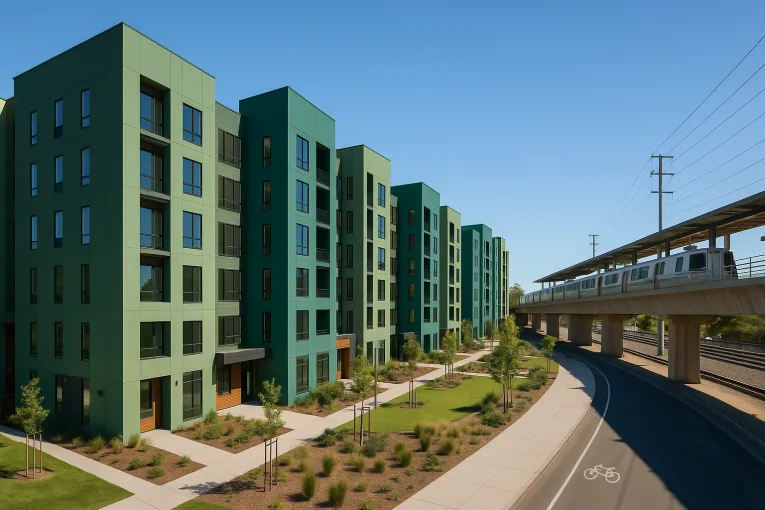
Key points: For over fifty years, the California Environmental Quality Act—CEQA—stood as a pillar of the state’s…

California has passed a law to gut the California Environmental Quality Act (CEQA) for most urban residential development, which is a win for individual property rights, economic mobility, and constitutional sanity, and the authors of a recent law review article argue that exclusionary zoning is a per se taking that violates the Takings Clause of the Fifth Amendment.
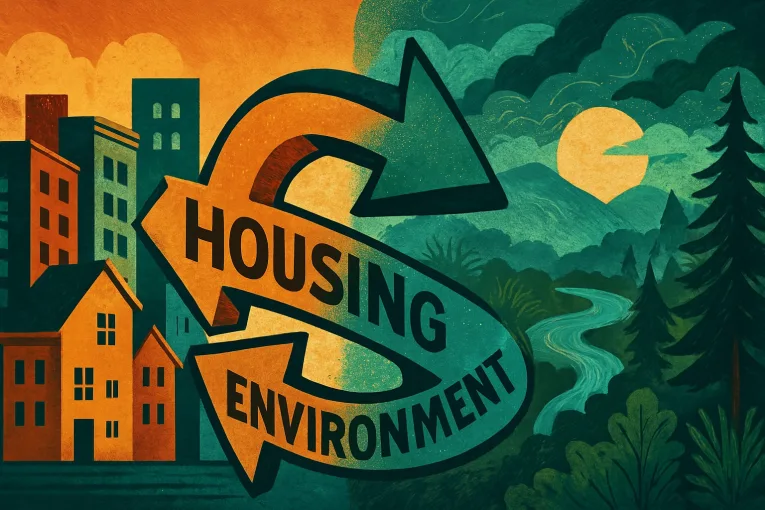
Environmental justice groups and conservation advocates are opposing Senate Bill and Assembly Bill 131, which they say would rollback environmental protections in California, exempting large-scale industrial developments from environmental review, allowing public agencies to withhold critical decision-making documents from the public, and weakening legal protections for endangered species, air and water quality, and community health.
A coalition of environmental and labor leaders is urging California lawmakers to halt a rushed effort to weaken the state’s foundational environmental law, citing overwhelming public support for the CEQA and opposition to legislative attempts to scale it back.

California YIMBY leaders Nolan Gray and Brooke Pritchard discussed the state’s housing crisis, the need for statewide solutions, and the potential of Senate Bill 79 to promote dense housing near high-quality transit hubs and limit urban sprawl.
SB 607, a bill to reform the California Environmental Quality Act, has sparked debate between state leaders and environmental justice organizations, with opponents arguing that it would gut CEQA safeguards and supporters claiming it is necessary to streamline development and address California’s housing shortage.
SB 607 has passed out of the Senate Appropriations Committee with major revisions, deleting the original content and replacing it with intent language signaling continued legislative discussions around CEQA reform, effectively tabling the most controversial provisions.
Opponents of SB 607 argue that the bill would gut California’s landmark environmental law, the California Environmental Quality Act, and undermine protections that have safeguarded communities for over half a century, posing health risks to construction workers and residents.
AB 609, a bill that would exempt qualifying infill housing projects from CEQA review, passed the State Assembly unanimously and now heads to the Senate, where it is expected to be considered alongside SB 607.